
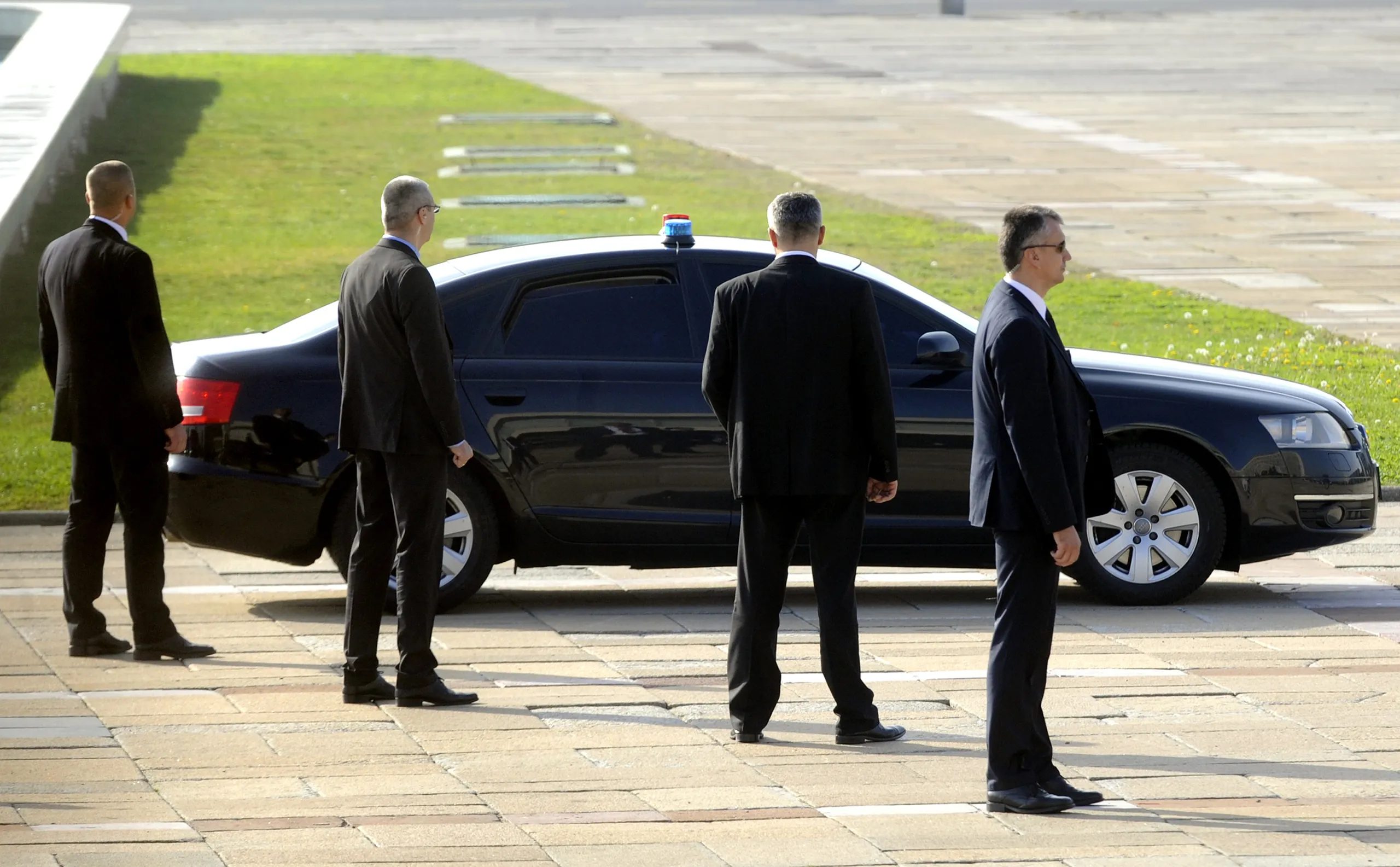
Planning travel to Bern? Speak with a security consultant.
Bern’s identity as a working federal capital rather than a commercial or tourist metropolis gives it a distinct security profile among European cities. The Swiss Federal Parliament, Federal Council, Federal Tribunal, and numerous UN-affiliated bodies are headquartered here, bringing a steady flow of senior government officials, diplomats, and executive-level visitors to what is, by European capital standards, a compact and manageable city. The old town, a UNESCO World Heritage site since 1983, sits within a loop of the Aare river and can be traversed on foot in under 30 minutes, which is both a practical convenience and a reminder that Bern’s risks are principally informational rather than physical.
For close protection purposes, the threat environment in Bern sits firmly at the low end of the European spectrum. Violent crime is rare, street crime is low, and the city’s federal security infrastructure means the Bundeshaus and diplomatic quarters are consistently monitored. The relevant risks for corporate and government-relations clients are subtler: the presence of multiple intelligence services (Swiss, allied, and foreign) with an interest in the negotiations and meetings that occur in Bern, the regularity of politically motivated demonstrations around the federal quarter during parliamentary sessions, and the standard European petty crime profile in high-footfall tourist zones. Executives attending sensitive commercial or political negotiations should treat information and communications security as the primary discipline.
The physical security environment does have one notable characteristic: Switzerland’s international neutrality and role as a diplomatic clearing house means that Bern hosts meetings between parties who, in other contexts, might be adversarial. Executives attending multilateral negotiations should be aware that their counterparts’ delegations may include personnel with intelligence roles. This is not a reason to avoid Bern, which is an excellent venue for sensitive discussions, but it informs the appropriate level of counter-surveillance discipline at meeting venues and in accommodation.
Transport logistics in Bern reward advance planning. The city is served by Bern Airport (BRN) for regional and private aviation, but most international visitors connect via Zurich Airport (ZRH) or Geneva Airport (GVA). Both are well-served by direct trains into Bern Hauptbahnhof, with journey times of 55 minutes from Zurich and approximately 105 minutes from Geneva. Secure chauffeured transfer from either international airport is the standard executive option, with armoured vehicles available for principals with elevated profiles.
Security Services in Bern
Close protection teams operating in Bern combine discreet personal protection with the advance security surveys and counter-surveillance disciplines particularly relevant to the Bern environment. Venue surveys for the Kursaal Bern, the Bern Congress Centre, and the range of federal-quarter hotels are standard preparation for principal visits. Liaison with Kantonspolizei Bern and Fedpol (the Federal Police) is available where the nature of a visit warrants coordination with Swiss authorities.
For executives engaged in long-form negotiations or extended stays, residential security assessments of serviced apartments and private residences are available, alongside technical sweeps of meeting spaces used for confidential discussions.
For related security services in Bern, see our bodyguard hire in Bern and security drivers in Bern pages.
What are the main security threats in Bern?
Protest and Demonstration Disruption
Bern hosts the Swiss Federal Parliament and Federal Council, making it a focal point for politically motivated demonstrations. Protests around parliamentary sessions, international summits, and EU-adjacent policy debates are regular occurrences. While violent disorder is rare, demonstrations can disrupt movement around the Bundeshaus district and require itinerary adjustments at short notice.
Digital Security and Information Gathering
As the seat of Swiss federal government and home to numerous UN agencies and intergovernmental organisations, Bern attracts significant intelligence community interest. Executives attending confidential negotiations or intergovernmental forums should treat digital communications with appropriate caution. The Swiss Federal Intelligence Service (NDB/SRC) notes that foreign state-sponsored espionage targeting Switzerland has increased in recent years.
Petty Crime in Tourist Areas
Bern's UNESCO World Heritage old town (Altstadt) and the Bahnhofplatz area see standard European levels of opportunistic petty crime: pickpocketing, bag snatching, and confidence scams. The risk is low by international comparison but merits awareness for executives moving through high-footfall zones without close protection cover.
Protest-Related Corporate Targeting
Switzerland hosts the headquarters of numerous multinational corporations, and Bern sees periodic targeted demonstrations outside corporate and financial sector offices. Executives from firms operating in sectors facing activist campaigns (extractives, pharmaceuticals, agribusiness) should factor this into venue selection and movement planning.
Vetted operators with direct experience in Bern
What security services are available in Bern?
Executive Close Protection
Discreet personal protection for senior executives, government officials, and high-net-worth individuals attending Federal Parliament sessions, UN agency meetings, or bilateral negotiations in Bern. Teams operate in line with Swiss regulatory requirements.
Secure Chauffeured Transport
Secure airport transfers from Bern Airport (BRN) and Zurich Airport (ZRH), with armoured and non-armoured vehicle options. Specialist winter driving capability for Alpine approaches.
Advance Security Surveys
Pre-visit security assessment of hotels, conference venues, and private meeting spaces across Bern. Includes access control review, emergency evacuation planning, and communication protocols.
Counter-Surveillance
Technical counter-surveillance for meeting rooms and accommodation used by principals engaged in confidential negotiations or intergovernmental sessions. Sweeping services available for short-notice deployments.
Event Security
Security planning and personnel for private corporate functions, product launches, and investor events at Bern venues. Includes liaison with Kantonspolizei Bern where required.
What are the rules for private security in Bern?
Key regulatory requirements for operating security services in Bern.
Firearms Policy
Carrying a firearm in public needs a federal carrying permit (Waffentragbewilligung) under article 27 of the Weapons Act of 20 June 1997. It is granted only to a person who credibly shows the weapon is needed to protect themselves, others or property from a real danger and who passes a test on weapon handling and the law; it lasts at most 5 years and is valid across Switzerland. Under article 11 of the Bern Act on private security services, firearms may be carried only for protection services and security transports and used only in self-defence or necessity, and the company's manager decides on and records each armed deployment.
Licensing
Private security in Canton Bern is governed by the Gesetz über das Erbringen von Sicherheitsdienstleistungen durch Private (SDPG, BSG 551.4) of 13 June 2018 and its ordinance (SDPV, BSG 551.411, in force since 1 January 2020). Security companies need an operating permit (Betriebsbewilligung), and the cantonal police (Kantonspolizei) is the permitting authority. Protection services for persons and goods at increased risk are covered. Companies may deploy only staff who meet nationality, legal capacity and criminal record conditions.
Foreign Operators
Security companies from other cantons or from abroad must notify the authority before working in Canton Bern (SDPG, article 3). The authority recognises companies that are subject to equivalent legal requirements. Ask any provider for its permit or notification. Separately, companies based in Switzerland that provide security services abroad must declare them in advance to the Federal Department of Foreign Affairs under the Federal Act on Private Security Services Provided Abroad (SR 935.41, in force since 2015).
Sources, checked : Gesetz über das Erbringen von Sicherheitsdienstleistungen durch Private (SDPG), BSG 551.4; Verordnung über das Erbringen von Sicherheitsdienstleistungen durch Private (SDPV), BSG 551.411; Swiss Weapons Act, article 27 (text, droit-bilingue.ch); Federal Department of Foreign Affairs, Federal Act on Private Security Services Provided Abroad.
Which areas of Bern carry elevated risk?
Lower-Risk Areas
- Bundeshaus and federal quarter: Bundesplatz, Federal Parliament, Bernstrasse diplomatic corridor. Well-monitored by federal police (Fedpol) and cantonal police. Very low incident rate.
- Matte and Altstadt (old town): UNESCO World Heritage core. Low crime, high tourist police presence. Safe day and evening, with standard European caution advised around late-night venues.
- Kirchenfeld: Diplomatic district south of the Aare. Home to several embassies and the Bernisches Historisches Museum. Quiet residential/diplomatic zone with low risk profile.
Elevated-Risk Areas
- Bahnhofplatz and Laupenstrasse: Around the main station. Standard urban petty crime risk. Heightened vigilance advised for bag and device security.
- Lorraine district: Historically higher social deprivation. Petty crime risk slightly above city average, though violent crime remains rare.
Deploying to Bern? Get a vetted close protection detail.
Request ConsultationWho do you call in an emergency in Bern?
Police (Kantonspolizei Bern)
117
Ambulance
144
Fire
118
General Emergency (all services)
112
Inselspital Bern (University Hospital)
+41 31 632 21 11
British Embassy Bern
+41 31 359 77 00
What travel advisories apply to Bern?
- The Swiss Federal Intelligence Service (NDB) has noted increased foreign intelligence activity targeting Switzerland in its annual reports. Executives engaged in sensitive negotiations should implement digital security protocols and conduct device hygiene before and after visits.
- Demonstrations around the Bundeshaus can occur with limited notice during parliamentary sessions (typically March, June, September, December). Check the Federal Parliament calendar and monitor local Swiss media for planned protest activity when planning movement through the federal quarter.
- Bern Airport (BRN) serves primarily regional and private aviation. Most international arrivals connect via Zurich (ZRH, approximately 90 minutes by train or road) or Geneva (GVA, approximately 100 minutes). Build adequate transfer time into itineraries to reduce schedule pressure.
Frequently Asked Questions
Is Bern safe for business travel?
What security arrangements are appropriate for intergovernmental meetings in Bern?
Which hospital should I use in an emergency in Bern?
How do Swiss private security regulations affect visiting UK close protection officers?
Are there particular risks associated with the World Economic Forum period for Bern?
This page is published by CloseProtectionHire.com and written to editorial standards overseen by James Calloway, Senior Security Consultant (regulation, licensing, vetting and risk frameworks) and Marcus Webb, Security Operations Adviser (operational close protection, secure transport and city-specific safety).
Threat, regulatory and emergency information is sourced to named, dated authorities such as the FCDO, the US State Department and national licensing bodies. Last updated . See how we verify.