Nigeria · Close Protection & Executive Security
Close Protection in Abuja, Nigeria
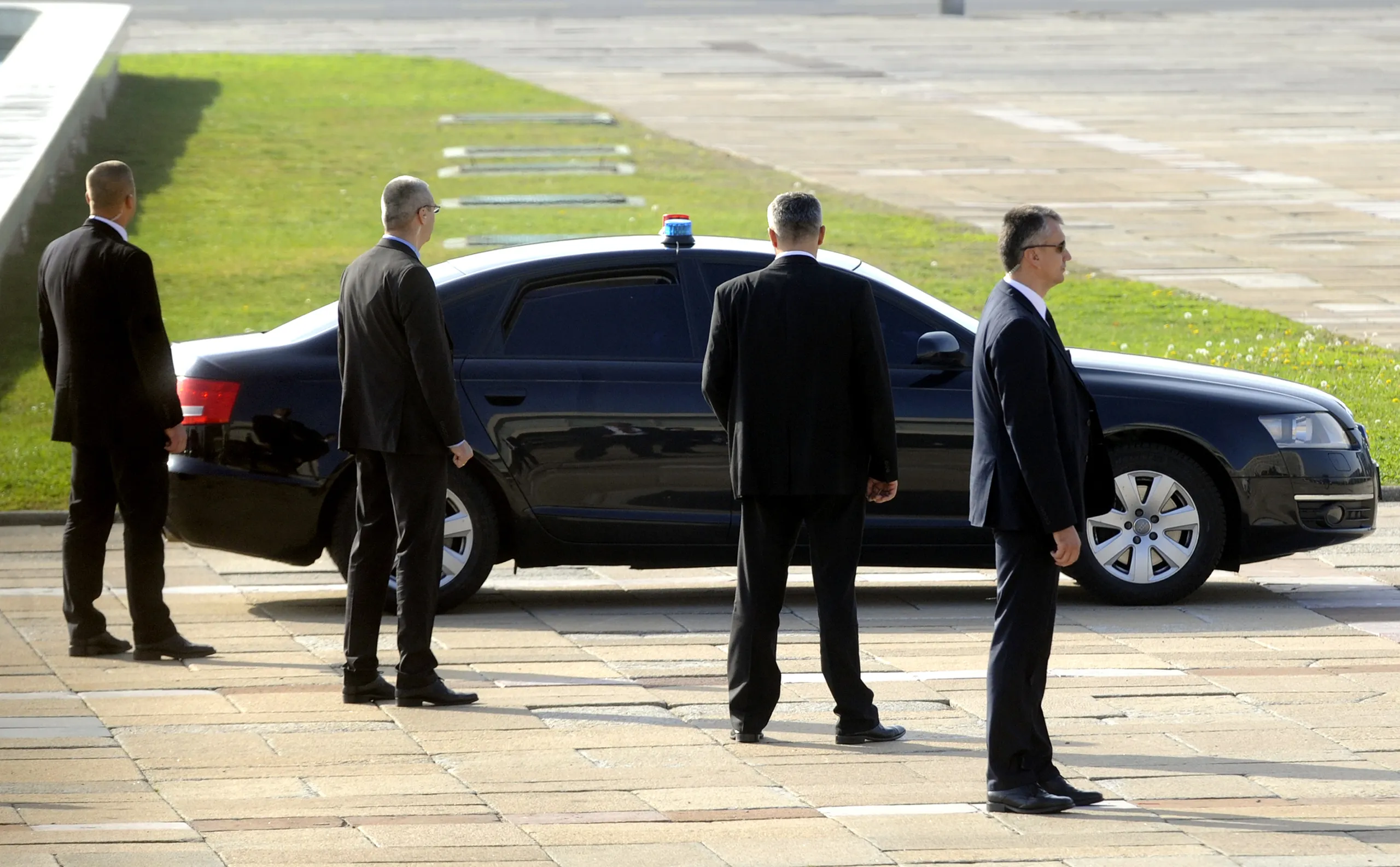
Close protection and security services in Abuja, Nigeria. Bodyguard hire, executive protection, and security drivers for corporate travellers in the Nigerian federal capital.
Planning travel to Abuja? Speak with a security consultant.
Abuja is Nigeria’s federal capital and seat of government, distinct from Lagos in character but not necessarily in risk. The presence of government ministries, diplomatic missions, and international organisations creates a different security environment from Lagos, but the fundamental Nigerian risk factors apply across both cities. Abuja requires its own threat assessment rather than a simple comparison with the commercial capital.
The security landscape
Abuja’s status as the federal capital means a higher concentration of security infrastructure than other Nigerian cities. The ministerial areas of Asokoro and the Three Arms Zone are heavily secured. The outer districts of Kubwa and Gwarinpa, and areas beyond the FCT boundary, are not.
The kidnapping threat defines the security posture for foreign nationals. The areas immediately outside the FCT have seen kidnapping incidents affecting both Nigerians and foreign nationals. Abuja city proper has lower frequency but the risk is not absent, particularly for principals with a visible profile or predictable routines.
The terrorism dimension
Abuja has not been immune to terrorism. The 2011 bombing of the UN headquarters in Abuja and the 2014 Nyanya bus station bombings, which killed over 70 people, established that Boko Haram and affiliated groups had both the intent and capability to reach the capital. The current threat level from ISWAP and Boko Haram remains elevated in northern Nigeria, and Abuja’s entry corridors and public spaces require specific vigilance.
For corporate visitors, this translates into awareness of crowded public locations, avoidance of Nyanya and Karu where possible, and selection of accommodation and meeting venues in the Maitama and Wuse 2 districts where security infrastructure is strongest.
Working in Abuja: districts and movements
Most corporate business in Abuja takes place in Maitama, Wuse 2, and the Central Business District. These areas are manageable with standard precautions: pre-arranged transport, avoidance of predictable routines, and accommodation with adequate physical security. Some ministry buildings are located in areas with limited security infrastructure immediately outside their perimeters.
Night movement outside the secured residential and business districts carries meaningfully higher risk. Pre-arranging all transport rather than using ride-hailing apps, and avoiding the Nyanya and Karu entry corridors, are the practical rules.
Routes beyond the FCT
Travel beyond the Federal Capital Territory’s boundaries requires specific threat assessment rather than an extension of the Abuja security picture. FCDO advises against all travel to Borno, Yobe, and Adamawa states and against all but essential travel to several other northern states. Inter-state road travel in northern Nigeria carries critical-level risk of armed attack and kidnapping. Any requirement to travel beyond the FCT should be assessed as a separate operation with appropriate security cover.
For the broader Nigerian operating environment, see our Nigeria country page. For comparison with Lagos, our Lagos city page covers southern Nigeria’s commercial capital and port city.
Source: FCDO Nigeria travel advisory (April 2026). NSCDC private security licensing framework. OSAC Nigeria Country Security Report 2025. US State Department Nigeria travel advisory (2026).
Threat Profile
Kidnapping
Kidnap-for-ransom is the primary threat for foreign nationals in Nigeria. While Abuja is more controlled than Lagos or the northern states, kidnapping incidents targeting expatriates and business visitors occur in the Federal Capital Territory and surrounding areas.
Terrorism
Boko Haram and Islamic State West Africa Province (ISWAP) remain active in northern Nigeria and have historically conducted attacks in Abuja. The 2011 UN headquarters bombing and 2014 Nyanya bombings demonstrated Abuja is not immune. The current threat level remains elevated.
Armed Robbery
Armed robbery, including vehicle hijacking and roadside attacks, occurs in Abuja and on routes to surrounding states. Night movement outside secured areas significantly increases exposure.
Routes to Northern States
Road travel beyond the Federal Capital Territory toward northern Nigeria carries critical-level risk. FCDO advises against all travel to Borno, Yobe, Adamawa, and other northern states. Armed attack on road convoys and kidnapping on inter-state routes are documented threats. This risk begins at the FCT boundary.
Vetted operators with direct experience in Abuja
Available Services in Abuja
Bodyguard Hire
NSCDC-registered close protection officers with FCT operational experience and knowledge of Abuja's political and security landscape.
Executive Protection
Full protective security for corporate executives, government liaisons, and senior officials visiting Abuja for business or government engagement.
Security Drivers
Vetted security drivers for Abuja city movement and intercity routes to Lagos, Port Harcourt, and the Nigerian Middle Belt.
Residential Security
Security management for expatriate residences in Maitama, Asokoro, Wuse 2, and Gwarinpa.
Security Regulations
Key regulatory requirements for operating security services in Abuja.
Firearms Policy
Nigeria's Firearms Act governs all weapons. Private security companies require Federal Government of Nigeria licensing. Armed security personnel must hold valid licences issued by the Nigeria Police Force or relevant authority. The Nigeria Security and Civil Defence Corps (NSCDC) regulates private security companies.
Licensing
All private security companies must be registered with the NSCDC. Individual security officers require vetting and registration. Foreign security operators must partner with NSCDC-registered Nigerian companies.
Foreign Operators
Foreign security personnel cannot carry firearms in Nigeria. All armed security must be provided by licensed Nigerian personnel. Foreign operators function in an advisory and coordination capacity through Nigerian licensed partners.
Zone Intelligence
Lower-Risk Areas
- Maitama: Embassy district with high security presence, reliable police response, primary expatriate residential area
- Asokoro: Government ministerial area, heavily secured, limited civilian movement
- Wuse 2: Commercial and residential district, moderate security environment, good service access
Elevated-Risk Areas
- Gwarinpa and Kubwa: Outer residential areas with longer emergency response times and higher crime rates
- Nyanya and Karu: Entry corridors to Abuja with documented history of bomb incidents and armed robbery
- Routes to northern states: Significantly elevated risk of armed attacks and kidnapping beyond the FCT boundary
Deploying to Abuja? Get a vetted close protection detail.
Request ConsultationEmergency Contacts
Police
199
Emergency Services
112
DSS (State Security)
+234 9 523 5401
Important Warnings
- Do not travel to Borno, Yobe, Adamawa, or other northern states from Abuja by road. These areas carry Critical-level threat ratings from both the FCDO and US State Department.
- Avoid Nyanya and Karu at all times where possible. These areas have been the site of bomb attacks and remain elevated risk.
- Do not use unverified transport. Pre-arrange all airport transfers and city movement through a known provider.
Frequently Asked Questions
Request a Consultation
Describe your security requirements below. All enquiries are confidential and handled by licensed consultants.
Your enquiry has been received. A security consultant will contact you within 24 hours to discuss your requirements.