
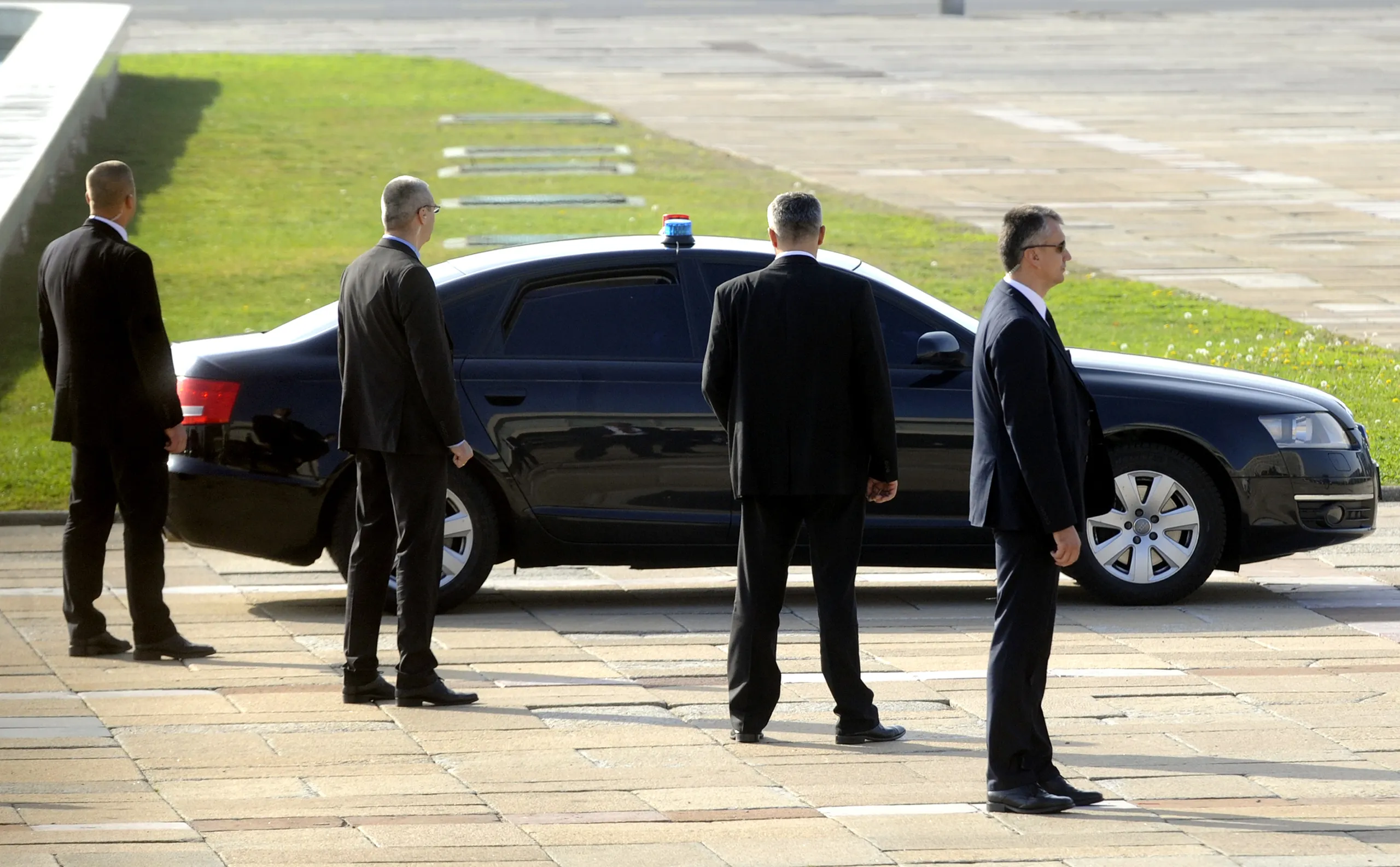
Travelling to Toronto with a close protection requirement? Speak to us before your itinerary is confirmed.
Hiring a bodyguard in Toronto is typically about corporate espionage and foreign state interference exposure rather than violent street crime, which is low. This page covers how close protection hire works in Ontario, what a provincially licensed officer does across a day of movements, and how quickly cover is arranged. Most corporate cover is unarmed, so hire pairs a licensed officer with discreet secure transport, scaled to the visit rather than a fixed contract.
The PSISA Ontario licensing framework
The Private Security and Investigative Services Act, 2005 (PSISA) requires all close protection officers working commercially in Ontario to hold a current Security Guard licence from the Ministry of the Solicitor General. The PSISA licensing framework includes approved training and criminal record screening as mandatory requirements. The voluntary ASIS International CPP designation provides the recognised benchmark for senior CPO practitioners in the Canadian market, and its presence in a CPO’s credentials is a meaningful quality indicator beyond the mandatory PSISA baseline.
The Toronto threat environment for CPO engagement
CSIS’s documented assessments of foreign state-sponsored commercial espionage targeting Bay Street and the Toronto-Waterloo technology corridor, combined with the targeted crime environment in Yorkville and the general corporate security context of a major North American financial hub, define the circumstances where CPO cover adds measurable professional value for specific principals in Toronto.
For complementary services in Toronto, see our Toronto city page and security drivers in Toronto.
Hiring for a wider corporate programme rather than a single trip? See executive protection in Toronto. To check the credentials and vetting behind the officers, see close protection officers in Toronto.
What does this cover in Toronto?
PSISA Ontario Security Guard Licensing Framework
Private security in Ontario is governed by the Private Security and Investigative Services Act, 2005 (PSISA), administered by the Ministry of the Solicitor General. Close protection officers working in Toronto typically hold a PSISA Security Guard licence as the mandatory baseline, complemented by current First Aid/CPR certification and, for experienced CPOs, voluntary ASIS International Certified Protection Professional (CPP) designation. The Security Guard licence requires completion of a Ministry-approved training programme and a clean criminal record check; the ASIS CPP is the voluntary industry standard for senior close protection practitioners in the Canadian market.
CSIS Threat Assessment and Urban Security Context
The Canadian Security Intelligence Service (CSIS) maintains the national terrorism threat at Medium (level 2 of 5) as of its current annual threat assessment. Toronto has experienced documented gang-related violence in specific residential zones, which does not typically intersect with corporate travel corridors. Targeted crime against wealthy individuals has been documented in the Bloor-Yorkville luxury retail district, including high-value watch and jewellery theft. Corporate espionage in Toronto's financial and technology sectors, particularly affecting Bay Street M&A activity and Waterloo-corridor technology company principals, is a recognised and documented risk.
Financial District, Yorkville, and Midtown Coverage
Toronto CPO operations cover Bay Street's Financial District (the principal concentration of Canadian and international banks and professional services firms), Bloor-Yorkville (the HNWI retail and hospitality zone, including the Four Seasons Toronto, Park Hyatt, and Hazelton Hotels), and Midtown Toronto's Rosedale and Forest Hill residential areas. Pre-advance work at major corporate event venues and the primary luxury hotel corridor is a standard element of multi-day Toronto CPO engagements. Operational familiarity with the PATH underground walkway network connecting Financial District buildings is relevant for winter operations.
Discreet Profile in a Professional Environment
Toronto's close protection culture mirrors the broader North American corporate security norm of professional discretion. CPOs operating in Toronto are typically attired to match the principal's professional environment; Bay Street business culture expects understated corporate presentation. Female and male CPO selection to match the principal's social and professional environment is standard practice in this market. Overt security posturing is avoided in hotel, retail, and corporate contexts throughout the Greater Toronto Area.
Pearson Airport Transfer Logistics
Toronto Pearson International Airport (YYZ) is Canada's busiest airport and the primary international gateway for Toronto. The two main passenger terminals, Terminal 1 (Star Alliance carriers) and Terminal 3 (other carriers), require separate ground transport routing. The airport to Financial District or Yorkville transfer is approximately 30-50 minutes by road depending on traffic conditions on the 427 or Gardiner Expressway approach. CPO-covered transfers from Pearson include pre-positioned vehicle, airside coordination where the engagement's operational plan permits, and route pre-advance for peak-hour arrival management.
Corporate Espionage in Financial and Technology Sectors
CSIS's annual public threat reports have consistently identified foreign state-sponsored commercial espionage targeting Canadian financial, technology, and natural resources companies as a material and growing threat. Principals involved in Bay Street M&A transactions, technology licensing negotiations involving companies in the Toronto-Waterloo corridor, or natural resources sector deals face a documented corporate espionage risk. Counter-surveillance briefing, device security protocols, and meeting venue selection advice are standard elements of the CPO pre-deployment package for high-value Toronto engagements.
Sources for this page
Licensing, firearms and foreign-operator rules for Toronto, checked : Government of Ontario, security guard or private investigator licence; Government of Ontario, private security and investigative services; Government of Ontario, security guard study guide; Authorizations to Carry Restricted Firearms and Certain Handguns Regulations (SOR/98-207), sections 2 and 3 (Justice Laws). The full rules are on our Toronto security overview.
Frequently Asked Questions
What licence does a bodyguard need to work in Toronto?
How much does a bodyguard cost per day in Toronto?
Is Toronto safe for corporate travel without a bodyguard?
What targeted crime risks are relevant to HNWI principals in Toronto?
This page is published by CloseProtectionHire.com and written to editorial standards overseen by James Calloway, Senior Security Consultant (regulation, licensing, vetting and risk frameworks) and Marcus Webb, Security Operations Adviser (operational close protection, secure transport and city-specific safety).
Threat, regulatory and emergency information is sourced to named, dated authorities such as the FCDO, the US State Department and national licensing bodies. Last updated . See how we verify.