
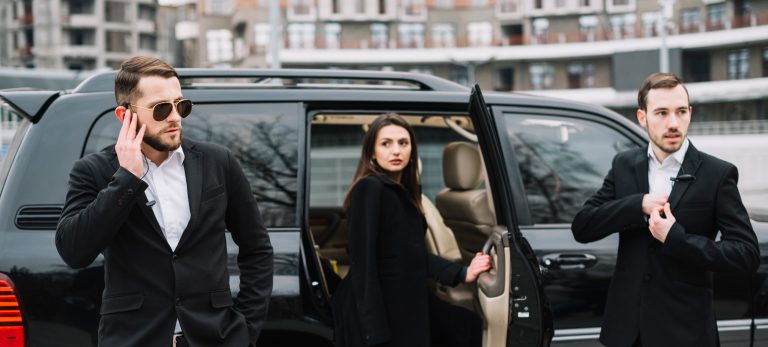
Request a protection detail in Florence
Hiring a bodyguard in Florence is typically about pickpocketing and distraction theft in tourist areas rather than violent crime, which is low. This page covers how close protection hire works in Italy, what a close protection officer does across a day of movements, and how quickly cover is arranged. Armed cover is uncommon, so hire pairs an unarmed officer with secure transport, scaled to the itinerary rather than a fixed contract.
The operational geography of Florence is shaped by the ZTL restricted traffic zone that covers the historic centre, which introduces vehicle access constraints not present in most other major European cities. CPO teams working Florence engagements plan transfer routes with ZTL boundaries as a primary variable, coordinating hotel access permissions and staging positions in advance of each principal movement. For HNWI principals based in Fiesole or Chianti estate properties, the rural transfer environment adds a separate planning layer with different logistics characteristics from the city centre.
For broader context on the city and complementary travel security services, see our Florence city page and security drivers in Florence.
Hiring for a wider corporate programme rather than a single trip? See executive protection in Florence. To check the credentials and vetting behind the officers, see close protection officers in Florence.
What does this cover in Florence?
Security Framework in Italy
Private security in Italy is governed by the Testo Unico delle Leggi di Pubblica Sicurezza (TULPS). Operating companies must be licensed by the relevant Prefettura, and the Prefetto approves each guardia particolare giurata (TULPS article 138). In Florence, the Prefettura di Firenze issues company licences; Italian law has no separate licence for close protection officers. A guardia particolare giurata may receive a licence to carry arms from the Prefetto on approval (TULPS article 138), but the TULPS sets out no armed close protection licence. In practice, the large majority of commercial close protection engagements in Florence are conducted on an unarmed basis. Article 134 of the TULPS limits the licence to Italian and EU citizens, and article 138 requires each guardia particolare giurata to be an Italian or EU citizen. Clients commissioning bodyguard hire in Florence should verify their provider holds a valid Prefettura licence and ask which licence covers the scope of work. The regulatory environment is consistent with northern Italian norms and enforcement is active.
Threat Environment
The FCDO Travel Advice for Italy, updated 2024, rates Italy as a low overall risk destination. Florence presents no exceptional security hazard for visiting executives, though operational awareness of specific local crime patterns is appropriate. Petty theft is the primary concern: pickpocketing is documented at tourist-density locations including Piazza del Duomo, Ponte Vecchio, Mercato Centrale, and the area around Santa Maria Novella (SMN) railway station. Distraction theft is the most commonly reported technique, targeting visitors preoccupied with bags, phone use, or tourist activity. Vehicle crime is reported along the A1 motorway corridor at service stations, consistent with ACI (Automobile Club d'Italia) guidance on road crime in northern Tuscany. During major fashion and trade events, including Pitti Uomo in January and Pitti Immagine in June, the city receives an influx of high-value visitors and the frequency of opportunistic targeting increases accordingly. There is no significant terrorism concern specific to Florence, though Italy maintains a national terrorism advisory level as part of the EU framework. Protest activity is low relative to other Italian cities; any gatherings in the city centre should be monitored on the day.
Key Operational Areas
The principal areas for CPO operations in Florence include the Santa Croce area, which concentrates HNWI hotels and the main corporate meeting venues in the historic centre. The Oltrarno district on the south bank of the Arno is quieter and more residential; principals based there benefit from reduced tourist density and lower ambient crime exposure. Fiesole, the hilltop village overlooking Florence to the north, hosts a number of significant private villas and is a discrete location for HNWI residence security and movement. The Chianti wine region to the south is a destination for estate visits and HNWI property transactions; rural transfers across Chianti present different logistics considerations from the city and require route planning appropriate to single-road estate access. Key hotels for principal coverage include Hotel Savoy Firenze (Piazza della Repubblica), Portrait Firenze (Lungarno Acciaiuoli), and Villa Cora (Viale Machiavelli 18). The main railway hub, Santa Maria Novella, is a standard transfer point for arrivals from Rome or Milan and requires attention to the petty crime environment on platform approaches and exits.
Business and HNWI Protection
Florence attracts a specific profile of international executive visitor, shaped by the city's position in the art market, the fashion sector, and HNWI estate management. Christie's and Sotheby's both maintain Italy operations connected to Florentine collections and auction logistics, and Pitti Uomo (January) and Pitti Immagine Uomo (June) draw global fashion buyers and brand principals to the Fortezza da Basso exhibition venue. Art market transactions involving high-value assets require close protection integrated with asset handling protocols, particularly during transfer between secure storage, auction venues, and hotel suites. The Chianti wine region, stretching from Greve in Chianti south to Siena, is a significant HNWI property acquisition zone; principals visiting estates for purchase due diligence or business meetings with wine producers require rural close protection cover adapted to estate access conditions and extended stays without urban infrastructure. Florentine family offices and wealth management consultancies also generate a protected client base, particularly for principals with regional profiles outside Tuscany who visit Florence for legal or financial appointments.
Airport and Transit Cover
The primary air gateway to Florence is Florence Peretola Airport, officially Amerigo Vespucci Airport (IATA: FLR), located 6km northwest of the city centre with a standard transfer time of 15 to 20 minutes under normal conditions. FLR serves a range of European and limited intercontinental routes; the terminal footprint is compact, which simplifies airside coordination and landside vehicle positioning. A number of international visitors arrive instead at Pisa Galileo Galilei Airport (IATA: PSA), 80km to the west, with a transfer time of approximately 75 minutes by road or by the Pisa Mover rail connection into Pisa Centrale and thence by direct train to SMN Florence. For principals arriving by private or business aviation, FLR has handling facilities and CPO coordination from the handling agent apron to the vehicle is standard practice. The transfer from FLR into the ZTL (Zona Traffico Limitato, restricted traffic zone) that covers much of historic Florence requires pre-planned routing: vehicle access to hotels within the ZTL requires a permit or coordination with the hotel's access provision, and this is factored into all Florence transfer planning.
Emergency Support
Emergency and trauma care in Florence is provided through the public hospital system, whose emergency departments (pronto soccorso) serve the city and the wider Tuscany region. The receiving hospital for an incident is confirmed in the operational plan before deployment rather than assumed, and ambulance dispatch on 118 routes to the appropriate facility. Private clinics in the city provide non-emergency consultations with shorter waiting times than the public system. Emergency services in Florence operate on the national Italian numbers: 118 for medical emergencies and ambulance dispatch, 113 for Polizia di Stato, 112 as the pan-European emergency number, and 115 for the fire service (Vigili del Fuoco). For British nationals, the British Embassy is in Rome (+39 06 4220 0001); there is no dedicated British consulate in Florence, but the Embassy provides consular assistance for all Tuscany-based emergencies. US representation is provided by the US Embassy Rome (+39 06 46741), with a US Consulate General in Florence covering Tuscany specifically. Medical evacuation coordination for principals requiring repatriation to the UK or other home countries is arranged through the principal's travel insurance provider and the relevant embassy, with the CPO team serving as the initial point of contact and coordination on the ground.
Sources for this page
Licensing, firearms and foreign-operator rules for Florence, checked : TULPS (Regio Decreto 18 giugno 1931, n. 773), article 133, text (Brocardi); TULPS, article 134, text (Brocardi); TULPS, article 138, text (Brocardi); Prefettura, Decreto Ministeriale 1 dicembre 2010, n. 269, as amended; DPR 4 agosto 2008, n. 153, text (tiropratico.com); Camera dei deputati, written submission by Verisure Italia on A.C. 1660 (20 May 2024). The full rules are on our Florence security overview.
Travel advice quoted on this page: FCDO travel advice: Italy. Advice changes; read the current version before travel.
Frequently Asked Questions
What licence does a bodyguard need to operate in Florence?
Is Florence considered a high-risk city for business travellers?
How does the ZTL restricted traffic zone affect close protection vehicle operations?
Which events in Florence require enhanced CPO planning?
Can a UK-licensed CPO operate legally in Florence?
This page is published by CloseProtectionHire.com and written to editorial standards overseen by James Calloway, Senior Security Consultant (regulation, licensing, vetting and risk frameworks) and Marcus Webb, Security Operations Adviser (operational close protection, secure transport and city-specific safety).
Threat, regulatory and emergency information is sourced to named, dated authorities such as the FCDO, the US State Department and national licensing bodies. Last updated . See how we verify.