
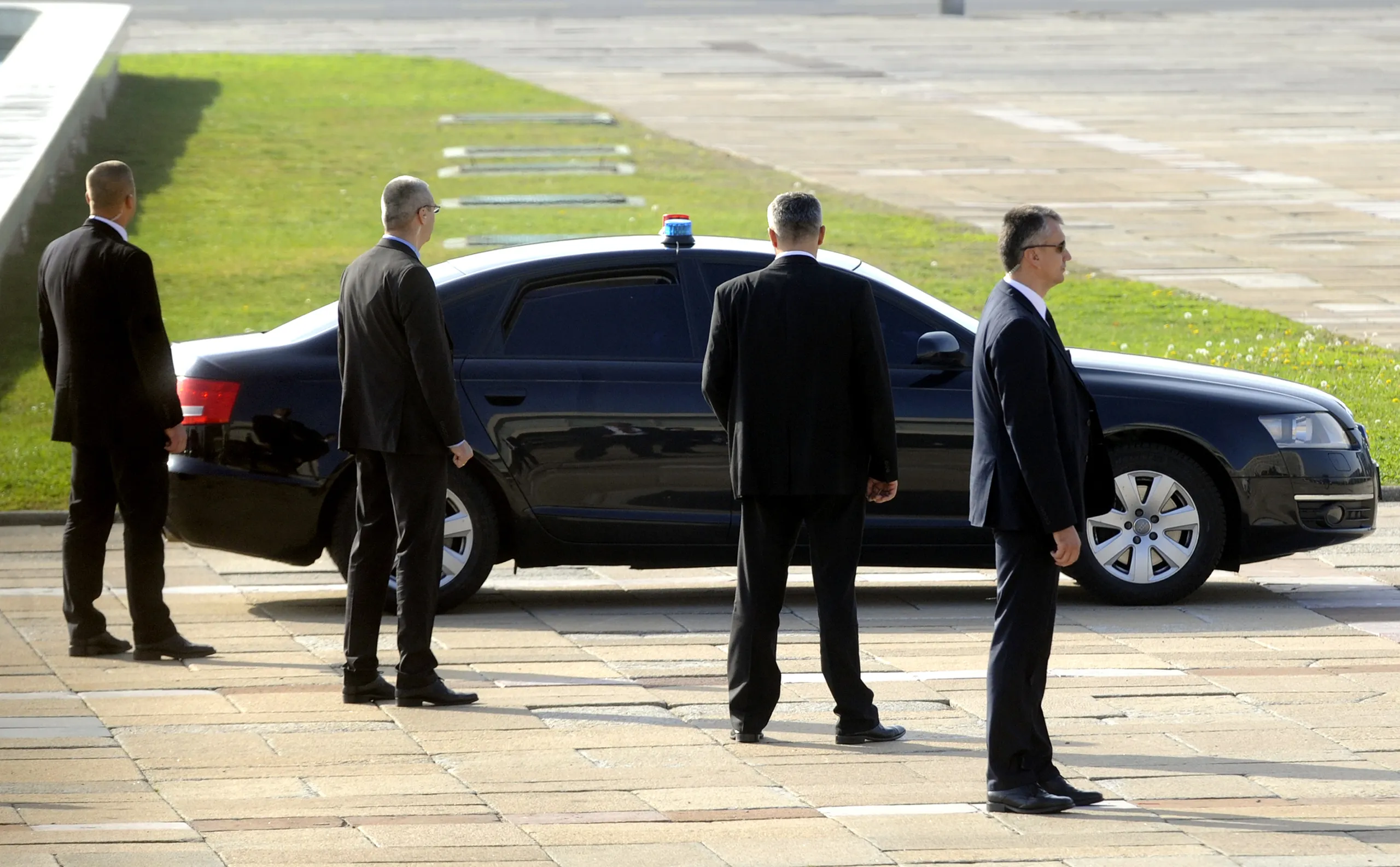
Book a close protection detail for Cordoba
Cordoba province holds Spain’s national temperature record, 47.4C, set at La Rambla on 14 August 2021 according to AEMET, the state meteorological agency. Ordinary summer highs of 37C or more are simply routine here, and that heat is a real operational variable for close protection, not a footnote: verified air conditioning, planned hydration, and shade access at every outdoor stop matter as much as any crowd or route assessment.
The crowd side of the picture centres on the Mezquita-Catedral and the Juderia, the former Jewish quarter, where dense tourist footfall around the ticket queue makes pickpocketing the most consistently reported risk in the city. Two annual events push that footfall further: the UNESCO-listed Patios Festival each May, which opens private courtyards across five old-town zones, and the Feria de Cordoba, held the same month at the Guadalquivir-side fairground. Officers working Cordoba need the Escolta Privado qualification under Ley 5/2014 de Seguridad Privada, separate from the base Vigilante de Seguridad licence, and protection here runs unarmed as standard.
Corporate visits lean toward Andalusia’s agricultural sector and Cordoba’s oleotourism circuit, built around one of the region’s largest olive oil industries. For the full city risk profile, see the Cordoba city page. Visitors combining Cordoba with the wider Andalusian circuit can compare coverage on the Seville bodyguard hire page and the Malaga bodyguard hire page, and those routing through the capital first should also review the Madrid bodyguard hire page. For a single festival or event engagement rather than a full trip, our event security service covers Patios Festival and Feria-scale crowd deployments specifically.
What does this cover in Cordoba?
Licensing Framework
Private security in Spain operates under Ley 5/2014 de Seguridad Privada, administered by the Ministerio del Interior through the Dirección General de la Policía. A general guard licence, the Habilitacion de Vigilante de Seguridad, does not cover close protection work; personal protection may be provided only by escoltas privados, a separate profession under the law. Whether an escort carries a weapon is decided when the protection service is authorised, and the large majority of Cordoba engagements proceed unarmed. Ley 5/2014 limits security staff to EU and EEA nationals, or nationals of a third country whose agreement with Spain allows it, and EU and EEA nationals must show training and aptitudes equivalent to those required in Spain.
Threat Environment
Spain's national terrorism alert has sat at Level 4 of 5 since November 2015, and FCDO guidance describes a high threat of attack, advising vigilance in crowded places and on public transport nationwide rather than flagging Cordoba specifically. The more routine concern in Cordoba itself is pickpocketing and bag-snatching around the Mezquita-Catedral ticket queue and the Juderia, the former Jewish quarter, consistently identified across independent travel-advisory sources as the city's densest tourist footfall, worst in peak season and late morning near the ticket office. No single official police figure was located for this pattern, but it is worth building into route and timing plans regardless.
Key Operational Areas
The Mezquita-Catedral and the surrounding Juderia form the core of Cordoba's visitor traffic and its main crowd-management challenge. Beyond the historic centre, corporate visits skew toward Andalusia's agricultural sector and the growing oleotourism circuit built around Cordoba province's olive oil industry, one of the region's largest. Cordoba province also holds Spain's national temperature record, 47.4C at La Rambla on 14 August 2021, per AEMET, the Spanish State Meteorological Agency; ordinary July and August highs of 37C or more are routine rather than exceptional.
Close Protection Services
Heat is a genuine operational factor here in a way it simply isn't in most European cities on this list. Summer details need a verified air-conditioned vehicle, planned hydration breaks, and shade access built into any outdoor engagement, whether that's a Mezquita visit or an olive-estate tour. Crowd movements are the other core skill: the Mezquita ticket queue and the narrow Juderia streets require close, briefed positioning rather than a static perimeter, and both the Patios Festival and the Feria de Cordoba bring dense seasonal crowds that call for the same discipline at scale.
Airport and Transit Cover
Cordoba Airport (ODB) carries negligible scheduled traffic, so almost all visitors route through Madrid or Seville and continue by high-speed AVE rail into Cordoba's Santa Justa-connected station, roughly one hour forty minutes from Madrid and 45 minutes to an hour from Seville. CPO teams meet principals at the arrival airport rather than waiting at the Cordoba end, which keeps the handover under direct protective control for the rail leg.
Communications and Contingency
Spain runs the unified 112 emergency number alongside Policia Nacional on 091, Guardia Civil on 062, and Policia Local on 092. Hospital Universitario Reina Sofia, +34 957 010 000, is the reference hospital for the city. Cordoba has no dedicated British consulate; the British Consulate in Malaga, +34 952 35 23 00, covers Andalucia as a whole.
Sources for this page
Licensing, firearms and foreign-operator rules for Cordoba, checked : BOE, Ley 5/2014, de 4 de abril, de Seguridad Privada (consolidated text); Ley 5/2014, articles 40 and 43, text (Papelea); Ley 5/2014, articles 26 to 28, text (Papelea); Ministerio del Interior, protección de personas; Policía Nacional, autorización de servicios de protección personal; Ministerio del Interior, armas y explosivos, normativa básica reguladora. The full rules are on our Cordoba security overview.
Travel advice quoted on this page: FCDO travel advice: Spain. Advice changes; read the current version before travel.
Frequently Asked Questions
What qualification do close protection officers need in Cordoba?
How much of a factor is heat when planning a Cordoba visit?
Is the Mezquita area safe for visitors?
How do the Patios Festival and Feria de Cordoba affect security planning?
Which airport should I fly into for a Cordoba visit?
This page is published by CloseProtectionHire.com and written to editorial standards overseen by James Calloway, Senior Security Consultant (regulation, licensing, vetting and risk frameworks) and Marcus Webb, Security Operations Adviser (operational close protection, secure transport and city-specific safety).
Threat, regulatory and emergency information is sourced to named, dated authorities such as the FCDO, the US State Department and national licensing bodies. Last updated . See how we verify.