Security Intelligence
Security for Political Fundraising and Donor Events | UK and International
Political fundraising dinners and donor events attract protest attention, hostile surveillance, and counter-intelligence interest. James Whitfield on managing security for political fundraising operations.
Written by James Whitfield — Senior Security Consultant
Political fundraising events sit at an unusual intersection of democratic transparency and security sensitivity. They attract individuals with significant political and financial influence, involve the processing of sensitive personal data, occur in the context of organised protest attention, and are of active interest to hostile foreign intelligence services. They also take place in an environment where the event organisers’ primary attention is on the political and interpersonal dynamics of the evening, not on its security management.
James Whitfield, Senior Security Consultant, works with political organisations, campaign teams, and event managers on security programmes for major fundraising events. The consistent observation is that political events carry a security premium above general corporate events that is rarely recognised in the planning process – and that the consequences of security failures at these events carry political as well as personal dimensions.
The security context for political fundraising
A major party fundraising dinner – the kind that raises six or seven figures in a single evening from a room of 100 to 200 high-net-worth donors – is a security event in several dimensions simultaneously.
Protest risk. The UK has seen sustained protest activity at political events across the spectrum. Since the passage of the Public Order Act 2023, protest activity has not reduced; it has adapted. Activists use social media to identify the location of fundraising events (often disclosed inadvertently through venue booking information, car hire clusters, and social media from attendees) and to coordinate attendance in numbers. The event security team’s ability to manage protest at the venue entrance, in coordination with the local police, determines whether guests arrive and depart in an orderly, dignified way or through a hostile crowd.
Counter-intelligence. MI5’s public annual reporting since 2022 has been increasingly explicit about foreign state targeting of UK political life. The specific interest in political donors is documented: identifying who funds which parties, understanding the relationship between donor interests and policy positions, and identifying potential channels for influence operations. This is an intelligence collection threat, not primarily a physical one, but it has real implications for who is invited to sensitive events, what is discussed in the room, and what information is available on donor lists.
Donor data security. Political parties process Article 9 special category personal data (political opinions) of their donors under the UK GDPR and the Data Protection Act 2018. The Information Commissioner’s Office has investigated political parties in connection with data protection obligations on multiple occasions. Beyond regulatory compliance, the donor list is a document of significant intelligence and commercial value – its contents identify individuals with political relationships and financial capacity that multiple adversaries would find useful.
Physical security. The physical security of the event depends primarily on venue selection and access management. A venue where access can be controlled – a private club, a corporate headquarters floor, a reception with a single controlled entrance – provides a fundamentally better baseline than a hotel ballroom accessible from a public lobby.
Venue selection as the primary security decision
The security outcome of a political fundraising event is largely determined before the event by the venue choice.
Key criteria from a security standpoint: controlled pedestrian access (ideally a single entrance, with no pavement-level access that protesters can obstruct); private vehicle access and parking that is separate from the public street (underground car park, private courtyard); no proximity to publicly accessible spaces that would allow a crowd to form around the entrance; a venue security team with event security experience; and a room configuration that allows a clear sight line from security positions to all entry points.
Public hotels with street-level ballrooms fail most of these criteria. Private clubs, corporate tower reception floors, and purpose-built private events facilities perform better. For events at senior level – where Cabinet or shadow Cabinet members attend – the Metropolitan Police protection team will have specific venue requirements that take precedence over the organiser’s preference, and coordination with the police advance team before venue confirmation is a standard requirement.
Protest management
Protest at a political fundraising event is a foreseeable event, not a surprise. The security planning should include an advance intelligence assessment of likely protest activity, conducted in the two weeks before the event.
Primary sources for this assessment: social media monitoring of activist groups with a focus on the party, speaker, or donor profile; police liaison with the Metropolitan Police Public Order team (for London events) or the relevant force; and awareness of what other events or announcements in the same period might increase activist mobilisation against the party.
The protest management plan should define: the physical sterile area around the venue entrance that guests will use; the communication protocol for guests arriving by private vehicle and requiring guidance to a sterile entrance; the coordination with police on the public order element; and the protocol for managing guests who are identified by protest groups and who may face direct personal confrontation.
The Public Order Act 2023 Serious Disruption to Daily Life conditions allow police to impose conditions on protest movements, noise, and location, but these require police action and police assessment of the threshold – the event security team cannot impose conditions unilaterally. Early police coordination maximises the chance of effective conditions being in place before guests arrive.
Coordination with police protection
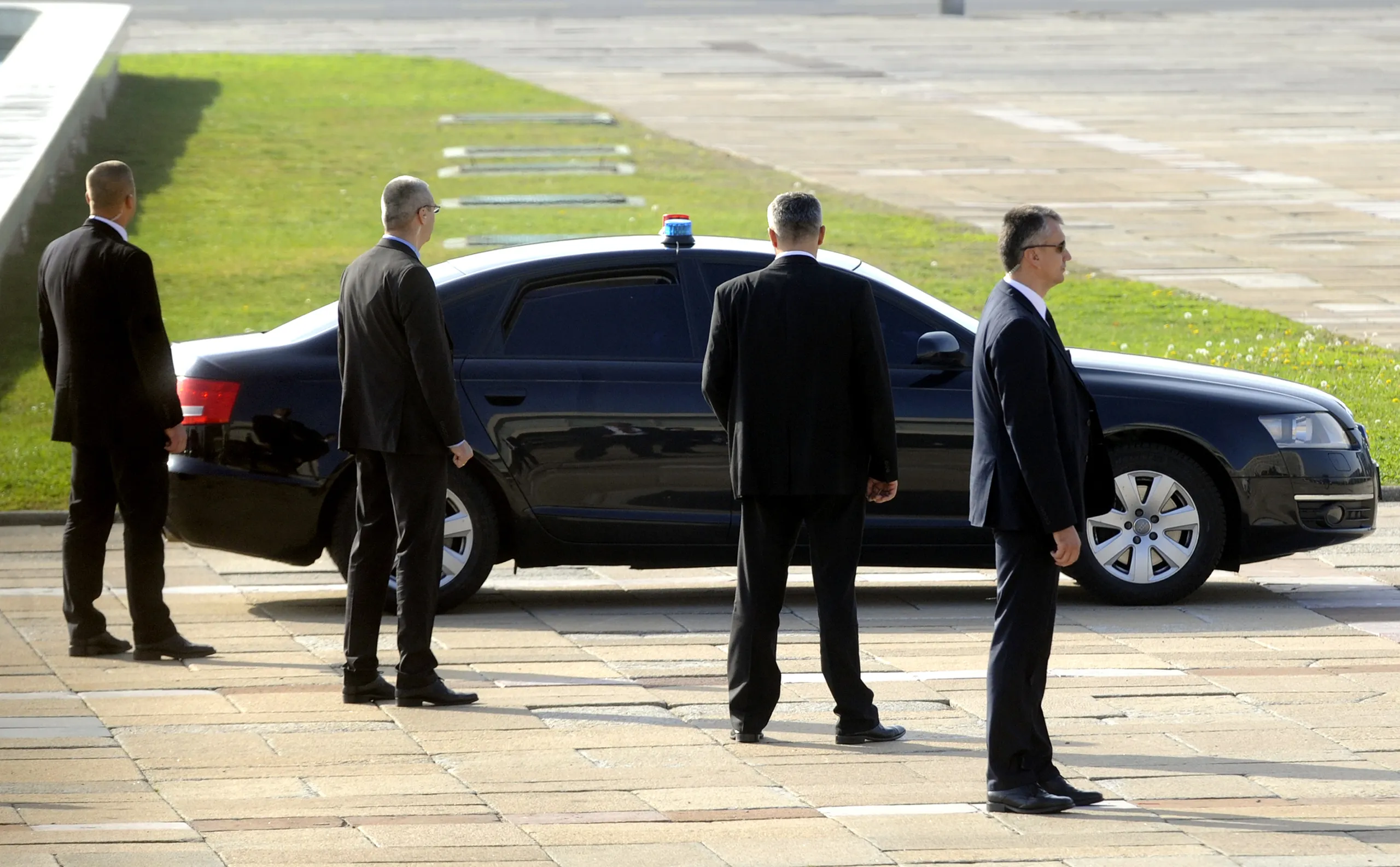
Cabinet ministers, former prime ministers, leaders of opposition parties, and a small number of other senior public figures receive statutory police protection from the Metropolitan Police Protection Command (MPPC, formerly Special Branch royalty and specialist protection). This protection follows the protectee to any event they attend, including private fundraising dinners.
The interface between the police protection detail and the event security team requires specific advance coordination. Key questions: who has authority over access control at the venue entrance during the event; how does the police advance team integrate with the event security structure; what is the evacuation protocol if police assess a change in threat level during the event; and how does the police close protection operative’s position in the room coordinate with the event security team’s coverage.
Improvising these answers on the evening creates confusion, slows response, and in the worst case creates a conflict of authority at a moment when clear command is needed. A pre-event briefing with the police advance team, the event security lead, and venue security is standard practice for events of this level.
For the broader framework of security for elections, campaigns, and political candidates, see our security for elections and political campaigns guide. For VIP protection methodology at conferences and events that underpins the close protection element of political fundraising security, see our VIP protection at conferences and corporate events guide.
Sources:
MI5: Annual Threat Update 2024. Director General’s Statement. London. National Counterintelligence and Security Center (NCSC US): Annual Report on Foreign Threats to the 2024 Election Cycle. Washington DC. Electoral Commission: Guidance for Political Parties – Donations and Reporting. 2024. Information Commissioner’s Office: Data Protection and Political Campaigning Guidance. 2024. Public Order Act 2023. HMSO. UK GDPR, Article 9: Special Categories of Personal Data. ICO, 2024. Metropolitan Police: Public Order Guidance for Event Organisers. 2024. ASIS International: Event Security Design Standard. 2024. NaCTSO: Protecting Crowded Places – Event Security Planning. 2024.
James Whitfield is a Senior Security Consultant with experience in VIP and principal protection, event security planning, and security for high-profile private and political events.
For the security framework applicable to government affairs and lobbying professionals who attend and organise the same type of events – covering public register targeting intelligence, Foreign Influence Registration Scheme obligations, parliamentary estate security, and foreign intelligence elicitation at party conferences – see our security for government affairs and lobbying professionals guide.
Key takeaways
Donor list security is a specific and significant data protection obligation
Political opinion data is Article 9 special category data under UK GDPR. The donor list contains sensitive personal data of individuals who may face professional, social, or in some cases physical risk from exposure of their political giving. Role-based access controls, access logging, printed document recovery, and data minimisation are non-negotiable security requirements.
Venue selection is the primary security decision for a fundraising event
The security of a political fundraising event is largely determined before the event by the venue selected. A venue with controlled access, no public pavement frontage, underground parking, and a single secured entrance provides a fundamentally different security baseline from a public hotel ballroom with street-level access and multiple entry points.
Protest risk requires advance intelligence, not reactive management
Protest at political events is planned in advance by activist groups using social media coordination. Advance social media monitoring, police NPOIU briefing requests, and activist group focus analysis provide the planning intelligence needed to right-size the security response before the evening, not during it.
Foreign intelligence targeting of political donors is documented and ongoing
MI5 and the US NCSC both report active foreign state intelligence operations targeting major political donors. For the most sensitive major donor events, consultation with the relevant counter-intelligence authority is warranted. The threat is intelligence collection and influence mapping, not typically physical -- but it creates operational security requirements for the event itself.
Police protection integration requires advance coordination, not day-of improvisation
Where a senior politician with statutory police protection attends a private fundraising event, the interface between the police protection team and the event security programme must be resolved in advance. Access control authority, entry screening protocols, venue evacuation plans, and communication between teams are all coordination items that cannot be improvised in the 30 minutes before guests arrive.
Frequently Asked Questions
Request a Consultation
Describe your security requirements below. All enquiries are confidential and handled by licensed consultants.
Your enquiry has been received. A security consultant will contact you within 24 hours to discuss your requirements.
