
Security Intelligence
Security for Legal Professionals and Law Firms
Lawyers and law firms face targeted threats from clients, organised crime, and hostile states. A senior security consultant examines the specific risks and protective measures for the legal sector.
Written by James Whitfield
Legal professionals operate at the intersection of some of the most dangerous human conflicts: organised crime prosecutions, international human rights disputes, high-stakes asset recovery against well-resourced opponents. The protective measures in place at most law firms do not reflect this reality.
This article examines the specific security risks facing lawyers and law firms, how to assess the threat profile of specific cases, and what protective measures are proportionate and effective.
The Threat Landscape for Legal Professionals
Threats to lawyers and law firms are not uniform. They cluster around specific practice areas and professional roles.
Criminal defence in organised crime and cartel cases. Lawyers who represent defendants in high-profile organised crime prosecutions – narcotics, trafficking, extortion – are sometimes targeted by the prosecution witnesses they challenge, by rivals of their client, or by the criminal organisation itself when it perceives the lawyer as either too effective or not effective enough. In Colombia and Mexico, the targeting of defence lawyers by criminal organisations is documented in UN Special Rapporteur reports and in OSAC country reporting. The UNHCR and Front Line Defenders document lawyer killings and attacks in these jurisdictions annually.
Human rights and transitional justice lawyers. Lawyers working on cases that challenge state actors, military conduct, or politically connected interests face risks that include state surveillance, asset freezes, detention, and in some jurisdictions, targeted physical harm. The UN Special Rapporteur on Human Rights Defenders publishes annual reports on threats to lawyers in this category. The risks are highest in Russia (post-2022 environment), Belarus, China, Ethiopia, and parts of Central America.
High-conflict family law. The category that produces the most individual incidents in stable Western jurisdictions is high-conflict family law. A volatile party in a contested custody or divorce matter may direct threat or actual harm against the lawyer representing the opposing party. The UK Courts and Tribunals Judiciary reported a significant increase in threats to legal professionals in family matters between 2019 and 2024. Lone working, home visits, and out-of-hours client contact create specific vulnerability.
Fraud and asset recovery. Lawyers pursuing asset recovery against well-resourced defendants – oligarchs, criminal networks, sanctioned individuals – may face surveillance, intimidation of witnesses and clients, and in some jurisdictions, physical threat. The tactics are often designed to obstruct the case rather than harm the lawyer directly, but the boundary between obstruction and threat is not always clear.
Assessing Case-Specific Risk
Not every case carries elevated security risk. The appropriate starting point is a case threat assessment – a structured review of who the opposing parties are and what their capacity for intimidation or harm is.
Questions the assessment should address:
Capacity. Does the opposing party, or parties associated with the matter, have a documented history of threatening or harming legal professionals? Do they have resources sufficient to mount a surveillance or physical operation? Is the jurisdictional environment one where such conduct is common?
Motivation. Is the outcome of this case significant enough to motivate action against the legal team? A minor commercial dispute is a different risk profile from a prosecution that could result in a 20-year sentence for someone connected to a violent criminal organisation.
Opportunity. Are there points in the case – pre-trial hearings, verdict periods, sentencing – where risk is elevated? Has there been prior threatening conduct that indicates a pattern?
Intelligence. Has there been any change in the behaviour of associated parties that suggests heightened interest in the lawyer or the firm? Surveillance by unfamiliar vehicles, unusual contact with staff, social media attention?
This assessment should be documented, reviewed by the firm’s risk management function, and revisited at key case milestones. For matters involving jurisdictions or opposing parties with serious threat profiles, specialist legal intelligence support from firms such as Control Risks, Kroll, or S-RM is warranted.
Physical Security for Law Firm Premises
Most law firm physical security is calibrated for opportunistic crime: walk-in theft, data theft by disgruntled former staff, or the generic risk of a city-centre office. It is rarely calibrated for targeted threat scenarios.
The gap becomes apparent when the threat is someone who knows the building: a former client who has observed reception procedures over multiple visits, a hostile party’s associate who has followed a lawyer to the office, or a determined individual who has spent time mapping the building’s access points.
Targeted physical security for law firms involves:
Access control. Meeting rooms where potentially volatile clients are seen should not be accessible to unescorted visitors. A separate secure meeting room with its own street-level access – so that high-risk meetings do not require the visitor to pass through the main office – is standard in firms that have implemented specialist security reviews.
Visitor management. Identity verification on arrival, a log of all visitors, and a briefing for reception staff on what constitutes a security concern and how to signal it without escalating a situation. This is not complex to implement and provides both a deterrent and an evidence base.
Panic provisions. Meeting rooms where high-risk client contact occurs should have a silent alarm or a discreet call protocol that allows a lawyer to summon assistance without provoking an already volatile situation.
Lone working protocols. Lawyers who work outside normal hours, in court or client premises, or who travel to high-risk jurisdictions are at elevated risk when operating alone. A documented lone worker protocol – regular check-in, emergency contact, defined escalation procedure – is a standard duty of care measure.
Digital Security as Physical Security
Law firms are among the most targeted organisations for state-sponsored cyber intrusion. The content of legal files – asset structures, criminal evidence, client communications – has strategic value to state actors, organised crime, and corporate adversaries.
Physical security and digital security intersect because the most effective way to obtain legally privileged information may be physical: accessing an unattended device in a meeting room, inserting a hardware implant in a laptop left in a courtroom, or planting a listening device in a conference room.
For lawyers handling matters with state-level threat profiles – human rights cases against authoritarian governments, international sanctions disputes, matters involving clients with state-level adversaries – physical security measures for devices, meeting rooms, and communication practices are as important as the cyber security investment.
TSCM sweeps of meeting rooms used for the most sensitive matters, clean device protocols for lawyers travelling to high-risk jurisdictions, and screen privacy filters in public spaces are proportionate responses to the documented threat.
For guidance on the full TSCM methodology, see our article on technical surveillance countermeasures for executives.
Security for Lawyers in High-Risk Jurisdictions
The risk profile for lawyers travelling to or operating in high-risk jurisdictions is significantly different from that in stable Western environments.
In Colombia and Mexico, legal professionals handling commercially or politically sensitive matters should apply the same security protocols as any other high-risk professional: varying routes between the office, court, and accommodation; avoiding publicising schedules; using vetted ground transport rather than taxis hailed on the street; and maintaining awareness of surveillance indicators around case locations.
In Russia (post-2022), Belarus, China, and other authoritarian environments, lawyers present for legal proceedings involving sensitive matters face specific risks: device inspection at borders, surveillance of communications, and, in some cases, detention. The FCO and US State Department publish specific guidance for legal professionals in these environments. A clean device protocol – travelling with a device that contains nothing sensitive, and communicating only on encrypted channels – is a minimum precaution.
For lawyers deployed for extended periods in jurisdictions with significant threat profiles, the duty of care obligations are the same as for any other employee in a high-risk deployment. ISO 31030:2021 travel risk management standards apply. The firm’s insurance should explicitly cover legal liability arising from employee harm in high-risk deployments.
When Close Protection is Appropriate
Close protection for individual lawyers is proportionate when the threat is credible, specific, and cannot be adequately mitigated by other measures.
The threshold is typically: a specific threat that has been made and assessed as credible; a case profile where lawyers have been targeted in comparable matters in the same jurisdiction; or an ongoing pattern of surveillance or threatening behaviour that suggests an active planning phase.
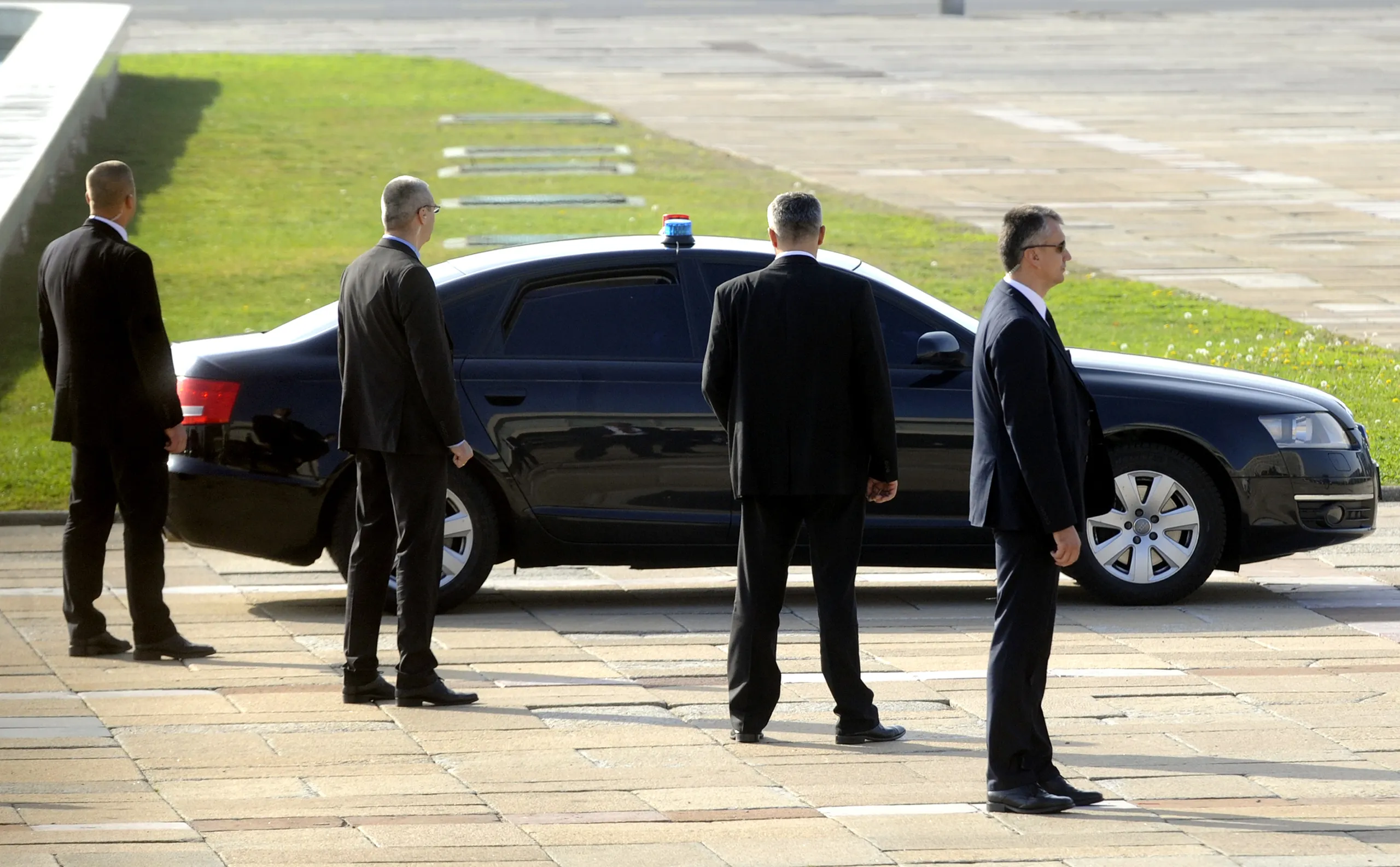
Close protection for legal professionals differs from executive protection in one important respect: the professional environment requires absolute discretion. A lawyer arriving at court or a client meeting with visible protective security signals something to the opposing party, the judge, and the media. The protective posture must be calibrated to be effective without being visible – a covert or low-profile format is usually more appropriate than overt close protection.
For the distinction between covert and overt formats, see our article on covert versus overt close protection.
Summary
Legal professionals face security risks that are specific to their role and their caseload. A firm that applies generic commercial office security to a practice handling organised crime prosecutions or cartel-linked matters has not assessed the actual threat environment. Case threat assessment, premises security calibrated to targeted scenarios, digital security as a physical security function, and defined protocols for threatening behaviour are the structural elements of a proportionate legal sector security programme. For legal professionals involved in international arbitration – where case documents, hearing venues in hotel meeting rooms, and counsel travel to P1 cities for fact-finding create a distinct security picture, and TSCM sweeps are warranted when opposing parties include state-connected entities – see our security for international arbitration proceedings guide. For the personal protection and close protection requirements of judges, magistrates, and prosecutors – including court escort security, witness security during proceedings, and judicial threats in P1 city environments such as Lagos, Bogota, and Manila – see our security for judges, courts, and legal proceedings guide.
Source: Front Line Defenders Global Analysis 2024. UN Special Rapporteur on Human Rights Defenders Annual Report 2024. OSAC Colombia Security Report 2024. OSAC Mexico Security Report 2024. Law Society: Guidance on Personal Safety for Solicitors 2023. UK Courts and Tribunals Judiciary: Threats to Legal Professionals Report 2024. Control Risks RiskMap 2025. ISO 31030:2021 Travel Risk Management.
James Whitfield is a Senior Security Consultant with 20 years of experience in executive protection, corporate security, and specialist threat assessment across high-risk environments globally.
Key takeaways
Lawyers are targeted because of the clients they represent
The threat to legal professionals is usually indirect -- the client's adversary, the criminal organisation under prosecution, the state whose interests are threatened by a human rights case. The threat profile is determined by the caseload, not just the individual.
High-profile cases create predictable targeting windows
Lawyers working on high-profile criminal prosecutions, cartel-linked cases in Latin America, or politically sensitive human rights matters face elevated risk during specific case phases: pre-trial hearings, verdict periods, and sentencing. These windows require heightened security posture.
Physical premises security is often inadequate for the actual threat
Most law firm physical security is designed for opportunistic crime -- walk-in theft, data theft by former staff. It is rarely designed for targeted threat scenarios: a hostile client who knows the building layout, a cartel contact who has observed the firm's routines over weeks.
Digital security is a prerequisite for physical security for lawyers
Privilege and attorney-client confidentiality make law firms high-value targets for state-sponsored cyber intrusion. Physical access to a partner's device or a meeting room achieves the same result as a network intrusion. Physical and cyber security must be integrated, not separate.
Duty of care for legal professionals has a specific regulatory dimension
In the UK, the Solicitors Regulation Authority and Bar Standards Board both include provisions relevant to employee safety. The firm's duty of care under the Health and Safety at Work Act 1974 extends to employed lawyers travelling to high-risk jurisdictions or handling cases with known threat profiles.
Frequently Asked Questions
Request a Consultation
Describe your security requirements below. All enquiries are confidential and handled by licensed consultants.
Your enquiry has been received. A security consultant will contact you within 24 hours to discuss your requirements.
