Scroll to top
Security for Judges, Courts, and Legal Proceedings | CloseProtectionHire

Security Intelligence

Security for Judges, Courts, and Legal Proceedings | CloseProtectionHire

Personal protection for judges, magistrates and prosecutors. UK Judicial Office guidance, witness intimidation statistics, court escort protocols and P1 city legal security risks.

6 May 2026

Written by James Whitfield

Why Judicial Personnel Face Increasing Security Risks

Judges, magistrates, and prosecutors occupy an unusual security position. Their role is inherently public. They are identified by name in decisions, listed in court schedules, and subject to scrutiny by parties whose interests they have ruled against. At the same time, the nature of their work – particularly in organised crime, corruption, terrorism, and high-value commercial disputes – places them in direct conflict with actors who have both the motive and, in many cases, the capability to act against them.

This is not a theoretical concern. The International Association of Judges (IAJ) has documented an increase in threats against judicial personnel across multiple jurisdictions over the past decade. In the UK, the Judicial Office Security Assessment Unit (JOSAU) exists because the threat to judges in high-profile cases is real and recurrent.

The UK Judicial Security Framework

In England and Wales, JOSAU provides personal security assessments for judges who have received credible threats or who are assigned to cases assessed as attracting organised threat activity. The unit works with police, NCA, and HMCTS security teams to determine what protective measures are appropriate.

HM Courts and Tribunals Service (HMCTS) manages physical security within court buildings. Crown Courts operate metal detection screening at entry, X-ray baggage screening, CCTV throughout public areas, and reinforced secure docks that physically separate defendants from the public gallery and the witness box. Dedicated secure entrances allow judges to access court buildings without passing through the public screening areas.

What the state framework does not consistently provide is close protection for judges outside court – the commute, the public appearance, the family home. For judges in standard caseloads, that gap rarely matters. For judges assigned to long-running organised crime trials, major corruption cases, or terrorism proceedings, it matters considerably.

Ministry of Justice statistics for England and Wales in 2022/23 recorded 14,300 witness intimidation incidents. That figure covers both formal witnesses and court-adjacent parties subject to pressure. It illustrates the scale of deliberate interference with legal proceedings – most of which falls below the threshold for formal state witness protection but well above the threshold at which private security measures become justified.

Witness Security: A Separate Discipline

Formal witness protection – identity change, relocation, sustained state financial support – is a relatively rare, resource-intensive state function administered by police and approved at senior CPS level. Most witnesses who face intimidation do not qualify, or the proceedings are not of the type the programme covers.

Witness security, provided privately, is a different and more accessible option. It covers:

  • Secure transport to and from court hearings, varying routes and departure times
  • Temporary accommodation for the duration of high-risk proceedings
  • A personal security officer during hearings and associated activities
  • Counter-surveillance measures around the witness’s home address
  • Advice on digital and communications security during the proceedings

For serious civil litigation, commercial arbitration, whistleblower proceedings, and high-value criminal cases, private witness security is a proportionate and increasingly standard precaution. It operates within the framework of existing police and court security arrangements rather than replacing them.

The Commute: The Period of Greatest Vulnerability

Court buildings have physical security controls. The judge’s or prosecutor’s office has some level of access management. The gap is transit – the journey to and from court, particularly if it follows a predictable pattern.

Predictability is the core vulnerability. A judge who uses the same route from home to court, at roughly the same time each morning, over weeks or months of a long trial, creates a pattern that hostile surveillance can map. Once the pattern is mapped, it requires very little operational sophistication to act against.

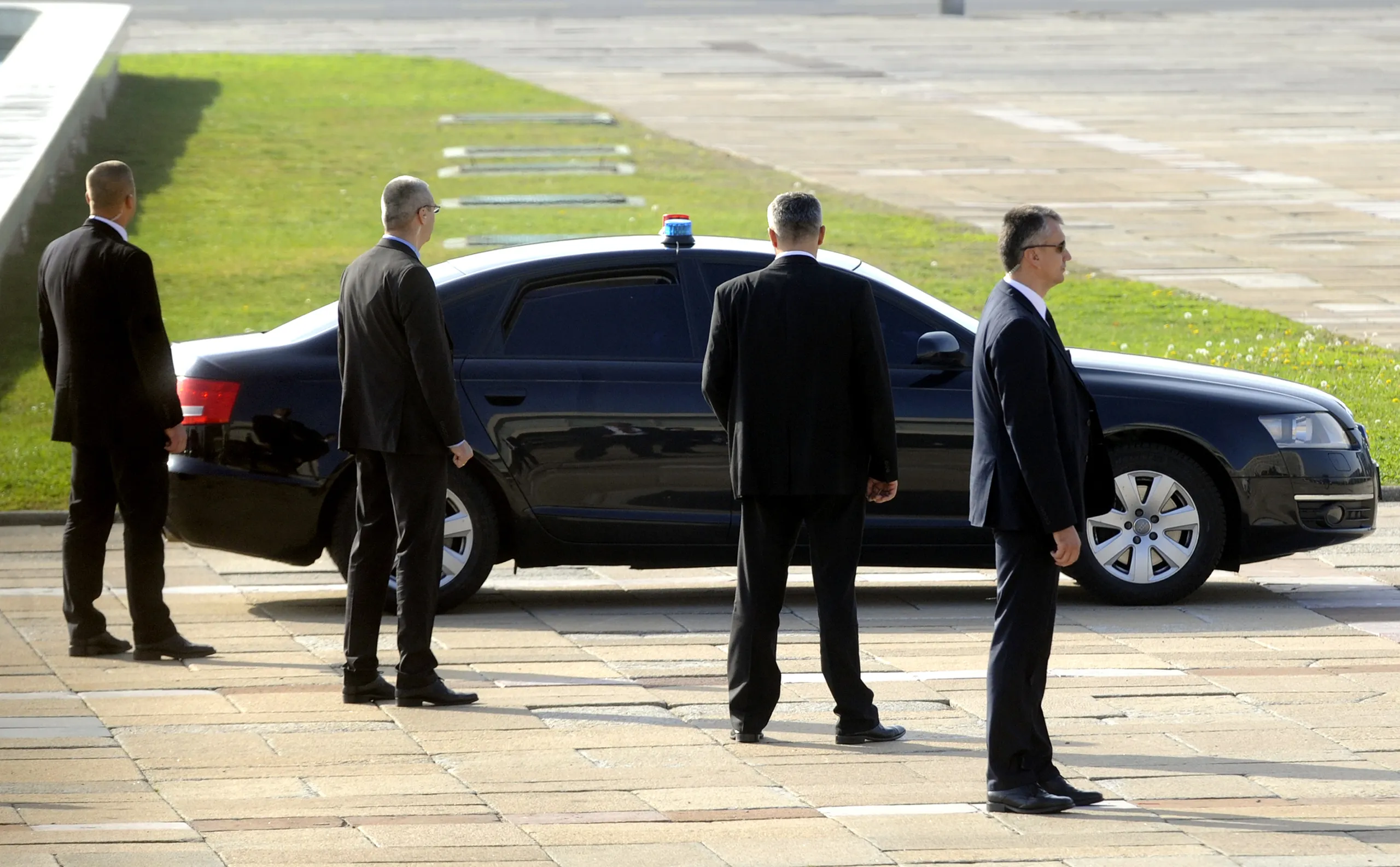
Secure driver provision, varying departure times, use of non-habitual routes, and counter-surveillance awareness for the principal and their immediate household all address this vulnerability without requiring a full residential or 24-hour protection detail.

For detailed guidance on how surveillance and patterns of life are exploited by threat actors, the analysis in hostile reconnaissance detection is directly applicable to the judicial and legal context.

P1 City Judicial Environments

Three P1 cities illustrate the range of risk facing legal personnel in international contexts.

Lagos hosts Economic and Financial Crimes Commission (EFCC) proceedings – cases involving senior politicians, state-level fraud, and organised financial crime. Judges in these cases have faced documented threats from political networks with significant resources and reach. The EFCC itself operates a security function, but judicial protection remains inconsistent. Expatriate legal counsel attending Lagos proceedings – as arbitrators, expert witnesses, or instructing counsel – need close protection that accounts for both the court environment and the broader urban threat picture.

Bogota remains active with prosecutions arising from FARC demobilisation agreements, ELN activity, and narcotics-linked asset forfeiture. Prosecutors and judges in these cases sit at the intersection of state enforcement and organised criminal interest. The Colombian Attorney General’s office operates a protection programme for its most exposed prosecutors, but capacity is limited and coverage is not universal.

Manila saw a series of documented threats against judges and prosecutors during the Duterte-era anti-narcotics campaign, particularly in cases where drug syndicate defendants faced evidence implicating political actors. Several judges were subject to targeted surveillance, and in a small number of cases, to physical attack. Security for legal professionals attending Manila proceedings should include a current threat assessment, not a generic country-level risk assessment.

One dimension of judicial and legal proceedings security that is frequently overlooked is technical surveillance. Attempts to intercept communications between legal teams – through proximity audio devices placed in conference rooms, compromise of counsel’s personal devices, or corruption of court officials – have been documented in serious organised crime cases and in high-value commercial litigation.

Technical Surveillance Countermeasures (TSCM) sweeps of conference rooms, chambers, and legal offices before and during sensitive hearings are a standard precaution in high-stakes proceedings. The capability, its applications, and the regulatory context are covered in detail in security for legal professionals and law firms.

Legal proceedings in P1 cities create a defined, time-limited security requirement. The principal – judge, prosecutor, instructing counsel, or expert witness – has a known schedule, a predictable location (the court building), and a defined period of heightened exposure (the trial or hearing dates). That profile suits close protection well.

An assigned officer can conduct pre-arrival venue surveys, coordinate with court security staff, plan routes and contingencies for the commute period, and maintain coverage during any social or professional engagements connected with the proceedings. The engagement ends when the proceedings conclude, which provides a natural scope boundary.

The close protection officer for a legal proceedings engagement should have current threat intelligence for the host city, familiarity with local court building layouts and emergency egress, and – for P1 city engagements – established working relationships with local law enforcement liaison contacts.

For senior legal professionals whose threat exposure extends beyond specific proceedings, a broader security review is appropriate. The framework for security for legal professionals and law firms addresses ongoing threat assessment, office security, and personal protection planning for legal sector clients.


James Whitfield is a Senior Security Consultant with experience in close protection operations, threat assessment, and security for legal sector clients. Enquiries: use the contact form.

Summary

Key takeaways

1
1
Judges in High-Profile Cases Require Threat Assessments Before Trial Begins

Waiting until a threat is received before initiating a security assessment is the wrong sequence. Once a judge is assigned to an organised crime, corruption, or terrorism case, a proactive threat assessment should be commissioned. In P1 cities, this is standard practice for well-resourced legal institutions. JOSAU provides this function in the UK, but it is reactive. Private threat assessments provide an earlier warning cycle.

2
2
Witness Security Is Not the Same as Witness Protection

Formal witness protection programmes -- identity change, relocation, state support -- are reserved for a small number of high-risk cases. Witness security, by contrast, can be provided privately: secure transport, route variation, temporary accommodation, and a personal security officer for the duration of proceedings. This is an accessible and proportionate option for serious civil or commercial litigation witnesses.

3
3
The Commute Is the Highest-Risk Period for Judicial Staff

Court buildings have physical security controls. The journey to and from court -- particularly a fixed route at a predictable time -- is the period of greatest vulnerability. Secure driver provision, route variation, and counter-surveillance awareness training for judicial staff significantly reduce exposure during this window.

4
4
P1 City Judicial Environments Require Specialist Local Knowledge

Security for judges, prosecutors and legal counsel operating in Lagos, Bogota, Manila, or Karachi requires understanding of the local threat landscape, relationships with court security personnel, and awareness of which cases are attracting attention from organised criminal or political networks. Generic close protection without this context is insufficient.

5
5
Electronic Surveillance of Legal Proceedings Is a Growing Threat

Attempts to intercept communications between legal teams -- through device compromise, proximity surveillance devices, or court official corruption -- have been documented in organised crime and high-value commercial litigation. Technical surveillance countermeasures (TSCM) sweeps of conference rooms and legal offices before sensitive hearings are an increasingly standard precaution in high-stakes proceedings.

FAQ

Frequently Asked Questions

The Judicial Office Security Assessment Unit (JOSAU) in England and Wales provides personal security assessments for judges who have received credible threats or who are assigned to cases attracting organised threat activity. HM Courts and Tribunals Service (HMCTS) manages physical security within court buildings: screening, CCTV, and court officers. For judges assigned to high-risk cases, additional close protection can be provided through specialist security contractors operating under MOJ framework agreements.

Witness intimidation ranges from direct threats and physical assault to harassment of family members and attempts to tamper with evidence. The Ministry of Justice reported 14,300 witness intimidation incidents in England and Wales in 2022/23. Countermeasures include varying the witness’s routine, secure transport to and from court hearings, temporary accommodation changes, and in serious cases a personal security detail for the duration of proceedings.

Significantly. In Lagos, judges presiding over EFCC anti-corruption cases have faced threats from organised political and criminal networks. In Bogota, prosecutors and judges handling ELN/FARC demobilisation or cartel asset forfeiture cases have required dedicated protective details. In Manila, judges connected to drug war prosecutions faced documented threats and several were subject to targeted attacks. The level of state provision for judicial protection in these cities is typically much lower than in the UK.

UK Crown Courts operate a security screening regime at entry: walk-through metal detection, X-ray screening of bags, and identification checks. Court officers maintain order in courtrooms. CCTV covers public areas. Secure docks with reinforced screens separate defendants from the public gallery. Dedicated secure entrances allow judges to enter without passing through public screening areas.

For most judges, the principal risk period is outside the court building: the daily commute, visits to chambers, public appearances, and personal activities. Court buildings have physical security controls. The vulnerability is in the predictability of the journey to and from court – particularly if the judge uses a fixed route and departure time. A close protection officer or secure driver for the commute period is often the most proportionate response to a credible threat.
Get in Touch

Request a Consultation

Describe your security requirements below. All enquiries are confidential and handled by licensed consultants.

Confidential. Your details are never shared with third parties.