Security Intelligence
Security for Fashion Week and Luxury Brand Events | CloseProtectionHire
Security for fashion week runway shows, luxury brand events and sample transit in Paris, London, Milan and New York. Talent CP, protest management, collection security.
Written by James Whitfield, Senior Security Consultant
Security for Fashion Week and Luxury Brand Events
Fashion week is, by design, a concentrated showcase of luxury, wealth, and visibility. The combination – high-profile attendees, high-value collections, intense media coverage, and four major cities in a compressed calendar – creates a security environment that requires specific professional planning.
This guide covers the security framework for brands, production companies, and personal security providers operating at fashion week and luxury brand events: the activist threat, the personal crime risk (particularly in Paris), sample and collection transit security, hotel showroom protocols, and the approach to VIP attendee close protection in a fashion event context.
Fashion Month: The Four Cities
The Big Four fashion weeks – New York (CFDA, February and September), London (British Fashion Council), Milan (Camera Nazionale della Moda Italiana), and Paris (Federation de la Haute Couture et de la Mode) – run back-to-back each season across approximately five weeks. Pre-collections, resort collections, menswear, and couture extend the calendar to near-continuous global event commitments for major houses.
The security risk profile varies by city. New York’s security environment is shaped by effective NYPD liaison and established venue protocols at Lincoln Center, Spring Studios, and other fashion week venues. London fashion week venues are distributed across the city, creating transit security requirements between shows. Milan’s concentration of luxury brand headquarters creates a showroom security challenge across the Quadrilatero della Moda. Paris carries the highest personal security risk of the four cities, driven by a documented pattern of targeting high-net-worth individuals associated with fashion week.
The Paris Targeting Problem
On 2 October 2016, during Paris Fashion Week, Kim Kardashian West was held at gunpoint in her private residence on the rue Tronchet and robbed of approximately EUR 9 million in jewellery. The gang responsible – later convicted members of what the French press called the bande des papys, a group specialising in targeting high-net-worth individuals – had identified the target’s location, jewellery holdings, and reduced security posture through social media and industry intelligence.
Twelve gang members were convicted in Paris in March 2021. Their investigation revealed a systematic approach: identify high-profile targets at fashion week through media coverage, monitor their movements and accommodation via social media posts, and exploit the window when the target’s personal security was at its lowest.
The incident was not an anomaly. The Groupe d’Investigateurs de Paris (GIP) is a documented criminal formation responsible for a series of high-value thefts targeting individuals in the luxury goods and entertainment sectors in Paris, Monaco, and related European cities. The pattern – target identification via media, social media monitoring, operational planning against predictable schedules – applies to fashion week because fashion week is, by its nature, a public event with very public participants.
Personal security briefings for high-profile attendees at Paris Fashion Week should specifically address: accommodation security, jewellery management and safekeeping, social media discipline regarding location and asset disclosure, departure protocols from events, and the composition and readiness of their personal security detail.
Activist Disruption
PETA has maintained the longest and most documented record of fashion event interventions. Its tactics at runway shows have included flour bomb attacks, paint attacks, banner drops from balconies, and runway stage invasions. Documented incidents include a Jean-Paul Gaultier show (flour bomb, Paris, 2013), multiple Milan fashion week runway invasions (2022 and 2023), and press event protests at major houses. The threat is not hypothetical – it is a recurring feature of fashion week security planning.
The Evolution Animal Activist Network has applied a secondary-targeting model – targeting brand partners and suppliers rather than the brands directly – that has extended the activist footprint beyond the shows themselves to advertising installations, brand events, and retail flagships. Animal Rebellion groups have added infrastructure protest tactics to the mix.
The common pattern: shows that use fur, exotic animal skins (python, crocodile, ostrich), or have publicly opposed animal welfare positions are at materially higher risk of disruption than those with established sustainability credentials. This does not mean the risk is zero for sustainable brands – some activist groups target fashion week broadly as a symbolic platform – but the targeting calculus favours houses perceived as most exposed on the animal welfare dimension.
Security measures for runway shows:
Venue access control. A defined accreditation system with a single access point for all non-credentialed arrivals is the baseline. Front of house staff should be briefed on the specific tactics activists use – the flour bomb is deployed at close range, typically from within the seated audience. This means access control at entry is the critical mitigation.
Advance intelligence. Monitoring of relevant activist social media and mailing lists in the three to four weeks before a major show provides early warning of planned actions. For houses at higher risk, a formal intelligence monitoring function (which several major luxury groups maintain in-house) provides the operational information needed to brief security and front of house teams.
Response protocol. A clear protocol for how front of house, security, and backstage teams respond to an activation reduces the chaos and the footage value of any disruption. The goal is to remove the individual quickly and without a confrontation that extends the media value of the incident.
Collection and Sample Security
A major fashion house’s runway collection, assembled for the show, can represent tens of millions of euros in value. Individual haute couture pieces routinely exceed EUR 100,000. Sample collections for press and buyer appointments carry comparable values. Security for this material in transit and in situ requires specialist handling.
Specialist carriers. Malca-Amit, DHL Art, and Armonia are the primary providers for high-value fashion collections in transit. These operators provide chain-of-custody documentation, GPS-tracked vehicles with driver verification, and insured handling that meets the requirements of specialist art and luxury insurers including Hiscox and AXA Art. Fashion houses operating with standard freight forwarding for runway or couture collections are underspecified.
Manifest confidentiality. The specific contents, stated value, routing, and timing of a collection shipment should be on a strict need-to-know basis. Social media posts of packed collection cases with routing information – common practice among fashion houses’ logistics teams – are an intelligence asset for theft planning. Confidentiality protocols should cover all staff who handle shipping documentation.
Showroom security. Hotel suites and meeting rooms serving as showrooms during fashion week concentrate significant collection value in a publicly accessible environment. The physical access control for a hotel showroom is not the same as the physical access control for a secured warehouse. Measures include: a single entry point with a doorperson checking credentials, a visitor log, end-of-day inventory against the shipping manifest, and overnight storage in a locked, alarmed room rather than on open racks.
For the broader framework on protecting high-value assets in transit and at events, see our guide to high-value asset protection and transport.
VIP Attendee Close Protection
High-profile attendees – A-list actors, musicians, athletes, and luxury brand ambassadors – at fashion week shows carry a personal security profile that combines celebrity exposure with the concentrated wealth indicators of the fashion environment.
The close protection brief for a fashion week principal covers:
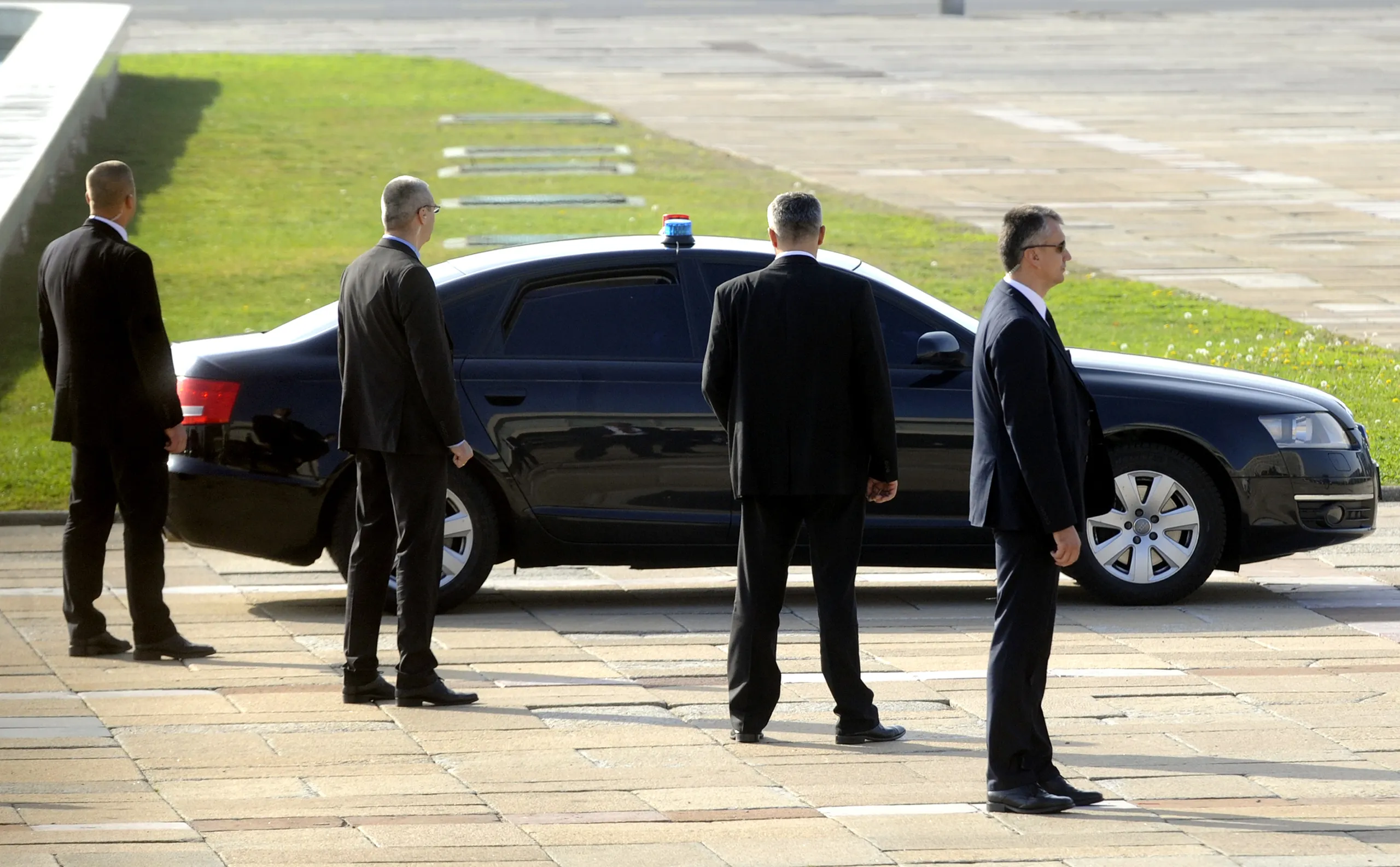
Pre-event advance work. The venue, the access route for credentialled arrival, the designated departure point, and the confirmed vehicle positioning. For Paris shows, the route from hotel to venue and back is specifically assessed against known targeting patterns.
Jewellery and asset management. High-value items worn to events should travel with appropriate security arrangements, be stored securely when not in use, and not be disclosed via social media in real time. Post-event jewellery transfer to a secure location – not left in a hotel room – is part of the end-of-event protocol.
Departure timing and route management. The departure from a major show is a high-exposure moment – phalanxes of photographers, media, and fans at the exit, a predictable timing window after the close of the show. Pre-positioned vehicles with confirmed driver, a designated departure route, and a rapid transfer from exit to vehicle are the baseline.
Accommodation security. For principals staying at major Paris hotels during fashion week, specific awareness of the targeting pattern described above is required. This includes briefings on social media discipline for the principal’s own accounts and for their wider team, and awareness of what information about their location, schedule, and asset holdings is visible to the public.
For the full framework on protecting high-profile individuals at events, see our guide to security for celebrities, athletes and entertainers.
Luxury Group Security Functions
LVMH, Kering, Richemont, and Capri Holdings each maintain group-level security functions that coordinate security across their portfolio of brands. These internal teams provide intelligence, protocol standards, and crisis response frameworks that individual brands draw on during fashion week. The gap is typically at the brand level, particularly for smaller houses within a group that lack dedicated security staff and rely on the group function for coverage they may not actually receive.
Independent brands – outside the major luxury conglomerates – are most exposed to security gaps during fashion week because they lack the group infrastructure. For these houses, engaging an external specialist for the fashion week period is the practical solution. The brief covers: show security coordination, collection transit, hotel showroom access control, and VIP attendee support.
Key takeaways
Paris Fashion Week carries the highest personal security risk of the four cities
London, New York, and Milan fashion weeks carry activist and opportunistic crime risks. Paris adds a documented pattern of targeting high-net-worth individuals at their accommodation, driven by the concentration of wealth, jewellery, and valuable collections in the city during fashion month. Personal security briefings for high-profile attendees should specifically address accommodation security and jewellery management.
Activist disruption is predictable and manageable
PETA and associated activist groups have established predictable targeting patterns for fashion week runway shows. Shows that use fur, exotic skins, or have publicly opposed animal welfare policy are at higher risk. Intelligence monitoring of activist social media in the weeks before a major show, combined with venue access control and a briefed response protocol, reduces the likelihood of a disruption reaching the runway.
Sample and collection security requires specialist carriers
High-value collections in transit should move with specialist carriers -- Malca-Amit, DHL Art, Armonia -- who provide chain-of-custody documentation, GPS-tracked vehicles, and insured handling. Manifest confidentiality is as important as physical security. Routing and contents should be shared only with people who need them. Social media posts of packed collection cases before departure are an intelligence gift to thieves.
Hotel showroom access control is frequently inadequate
Fashion week hotel showrooms concentrate significant collection value in rooms that the public can access via the hotel's own access system. A single attendant controlling the door, a visitor log, and an end-of-day inventory are not excessive measures given the values involved. Pre-arrival room security checks are advisable for high-value showrooms in cities with known targeting histories.
VIP attendee security extends beyond the event
The security perimeter for a high-profile attendee at Paris or Milan Fashion Week does not end at the venue door. The departure phase -- leaving the show, moving to the next appointment, returning to accommodation -- is where the risk is highest. Pre-positioned vehicles, departure time management, and route variation are the basics for any principal with a significant jewellery or personal asset profile.
Frequently Asked Questions
Request a Consultation
Describe your security requirements below. All enquiries are confidential and handled by licensed consultants.
Your enquiry has been received. A security consultant will contact you within 24 hours to discuss your requirements.