
Travelling somewhere high-risk? Speak with a security consultant.
Cairo is one of the largest cities in the Arab world and a key business destination for energy, infrastructure, and regional finance. The Egyptian security environment is dominated less by violent crime and more by political volatility, regional spillover, and a specific logistical risk profile around the airport and city movement. This guide covers when professional security driving adds value in Cairo and how the Egyptian regulatory framework works.
The Cairo Threat Picture
Cairo’s threat picture differs from most other cities we cover in important ways. Violent crime against foreigners is relatively uncommon in central districts. The FCDO advises against all but essential travel to specific Egyptian regions (parts of the Sinai Peninsula, the western desert near the Libyan border) but does not advise against travel to Cairo itself. The US State Department rates Egypt at Level 2 (“Exercise Increased Caution”) with specific Do Not Travel guidance for the Sinai interior and western desert.
The risks that affect business visitors in Cairo specifically are:
Terrorism. Egypt has experienced terrorist incidents over the past decade, primarily targeting Egyptian security services and Coptic Christian sites rather than foreign business visitors. The threat is real but not principally directed at the kind of business travel typical for Western corporate visitors. Five-star hotels in Cairo (Ritz-Carlton Nile, Four Seasons First Residence, Fairmont Heliopolis, St. Regis Almasa) operate with hardened security following the threat history of the region.
Political demonstrations and protests. Cairo has a recent history of large-scale political mobilisation. Most periods are calm, but unannounced demonstrations can develop quickly, particularly in Tahrir Square and around government buildings. Business movements that pass through these zones can be affected.
Road traffic risk. Cairo traffic is famously chaotic and Egyptian road safety statistics place it among the more dangerous environments for road use. Pedestrian injuries are common; vehicle accidents are frequent. A professional driver familiar with Cairo traffic mitigates significant routine risk.
Petty crime and fraud. Tourist-targeted fraud, pickpocketing in markets, and overcharging in transactions are common. For business visitors operating in corporate environments, these are minor concerns.
Regional spillover. Cairo’s location creates exposure to broader regional dynamics. The Gaza-Israel situation, instability in Sudan, and the Libyan civil war all create indirect security considerations for Egypt-based business visitors.
The Airport Question
Cairo International Airport (CAI) is the primary entry point. The journey from CAI to the central business districts (Garden City, Zamalek, Downtown, the Nile Corniche) and to the New Administrative Capital takes 30-90 minutes depending on time of day and route. The journey passes through several areas where vigilance is appropriate, particularly during return movements after working hours.
The professional standard for executive arrivals at CAI is pre-arranged collection at a specific terminal point, with the driver and vehicle identified in advance. CAI’s arrival areas are typically crowded with unauthorised drivers approaching foreigners; this is a fraud risk more than a safety risk, but it is a logistical friction point that pre-arranged transport eliminates.
The Egyptian Private Security Framework
Egypt’s private security industry is regulated through the Ministry of Interior. Security companies require Ministry licences to operate. Vehicle-based services with security driver function operate under standard commercial transport licences combined with security industry licensing for the personnel where they are providing protective functions.
For corporate clients, the verification process for an Egyptian security driver service involves: confirming the operator’s Ministry of Interior licence number; confirming the specific driver’s background and identity; confirming the vehicle registration and insurance status; confirming the service provider’s protocols around movement planning and incident response.
Armed private security in Egypt is restricted. The standard for civilian security driver services is unarmed but trained operators, with coordination with the appropriate Egyptian authorities for any principal with elevated threat profile.
When Professional Security Driving Adds Value
For corporate visitors to Cairo, professional security driving adds value primarily through:
Logistical management. Cairo’s traffic environment is unpredictable; a driver experienced with the city manages time-critical movements far better than visitor-arranged transport.
Route knowledge. Knowing which routes avoid demonstration zones, which areas to avoid late at night, and which alternative routes are available if a primary route is blocked.
Communications and reporting. A professional service maintains check-ins with an operations base, so any incident or significant delay is known about and can be responded to.
Vehicle standards. Reliable, well-maintained vehicles with appropriate features (working air conditioning is not trivial in Cairo summer, working seatbelts, current insurance) are not the norm in Cairo’s general taxi fleet.
Specific threat response. If political volatility increases during a visit, having a driver with the training and authority to extract the principal from an evolving situation is the difference between a controlled response and an improvised one.
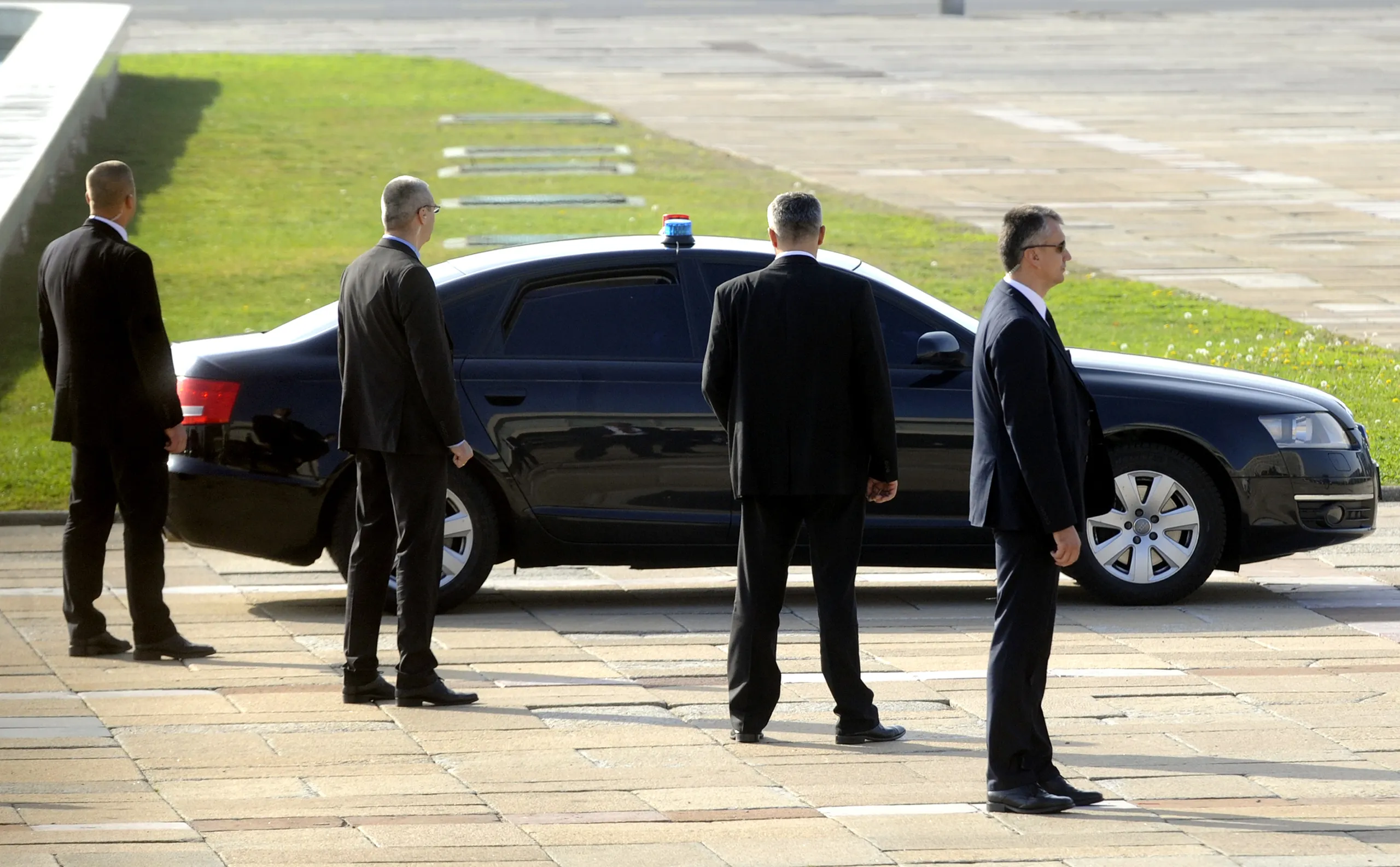
For most standard corporate visits to Cairo, a vetted security driver is the appropriate baseline. Full close protection is warranted for senior executives in sectors with specific Egypt exposure, for principals with documented threats, and during periods of elevated regional tension.
For full Cairo service details see our Cairo city page and our security drivers service overview.