
Travelling somewhere high-risk? Speak with a security consultant.
Mexico City is Latin America’s most visited business destination. It is home to the Latin American headquarters of hundreds of multinational companies, a growing tech sector, and more direct international flights than any other city in the region. It is also a city where the security picture requires some honest thinking before you travel.
The good news: for a business traveller staying in the right districts, using professional ground transport, and applying reasonable operational awareness, the day-to-day risk is manageable. The concern: the city has genuine threats, and they are not distributed evenly. Where you stay, how you move, and what you communicate publicly about your visit all affect your exposure.
The Threat Picture
The UK FCDO, as of early 2026, does not advise against travel to Mexico City itself, though it maintains advisories against all but essential travel to several surrounding Mexican states. The US State Department rates Mexico City (CDMX) at Level 2 (Exercise Increased Caution) at the time of writing, the same rating as the national advisory, though several individual Mexican states are placed a notch or two higher.
The primary threats for business travellers in Mexico City are:
Express kidnapping. Short-duration abductions, typically to extract ATM withdrawals, remain a documented risk. The most common scenarios involve unverified taxis and late-night movement. This is not theoretical. The FCDO explicitly warns against hailing street cabs. Use Uber (verified in-app), hotel transfers, or arranged transport with a known provider.
Carjacking. Vehicle theft, including from occupied vehicles at traffic lights, occurs across the city but concentrates on certain routes and at certain times. Vehicles with obvious value indicators are higher-risk targets.
Petty theft and opportunistic crime. Lower stakes but frequent, particularly in tourist areas and on the Metro. Laptop bags and visible electronics are common targets.
Organised kidnap for ransom is a lower-frequency risk in CDMX proper, though it is far from absent in other Mexican states. Executives with profiles in energy, extractives, financial services, or with obvious wealth markers should have their specific circumstances assessed.
Where to Stay and Work
Mexico City’s geography matters enormously for the business traveller’s risk profile.
Lower-risk business districts: Polanco, Lomas de Chapultepec, Santa Fe, and the Paseo de la Reforma corridor. These are where international hotels, law firms, financial services offices, and multinational HQs are concentrated. Security presence is higher, crime rates lower relative to the city as a whole.
Avoid unless necessary: Tepito, Doctores, Iztapalapa, and parts of the historic centre at night. These areas have crime rates that are materially different from the business districts. There is rarely a business reason for a corporate traveller to be in these areas.
If your meetings or site visits take you outside the standard business districts, factor the route into your planning. Improvised travel through unfamiliar areas after dark is where incidents concentrate.
Ground Transport: the Non-Negotiable
This is not an area for cost-saving. The FCDO recommendation against hailing street taxis in Mexico City is one of the more specific and consistent travel safety recommendations in their Latin America guidance. The risk of a pirate taxi (one that has been set up specifically to enable robbery or express kidnapping) is real.
Verified alternatives:
- Uber within the app, verified by number plate and driver photo before entry
- Cabify (the other major app-based service in CDMX)
- Hotel-arranged transport with a known driver
- Pre-arranged security driver for executives on a visible profile or moving outside standard districts
For airport arrivals, Mexico City International Airport (NAICM, Felipe Angeles, or Benito Juárez depending on carrier) has authorised taxi ranks inside the terminal. Use the official desk, pay in advance, take the receipt. Do not accept offers from people approaching you in arrivals.
What Professional Security Looks Like in Mexico City
For executives who require close protection in Mexico City, the market is well-developed. Mexico’s private security sector is regulated by the Secretaría de Seguridad y Protección Ciudadana (SSPC), and licensed operators must comply with federal requirements.
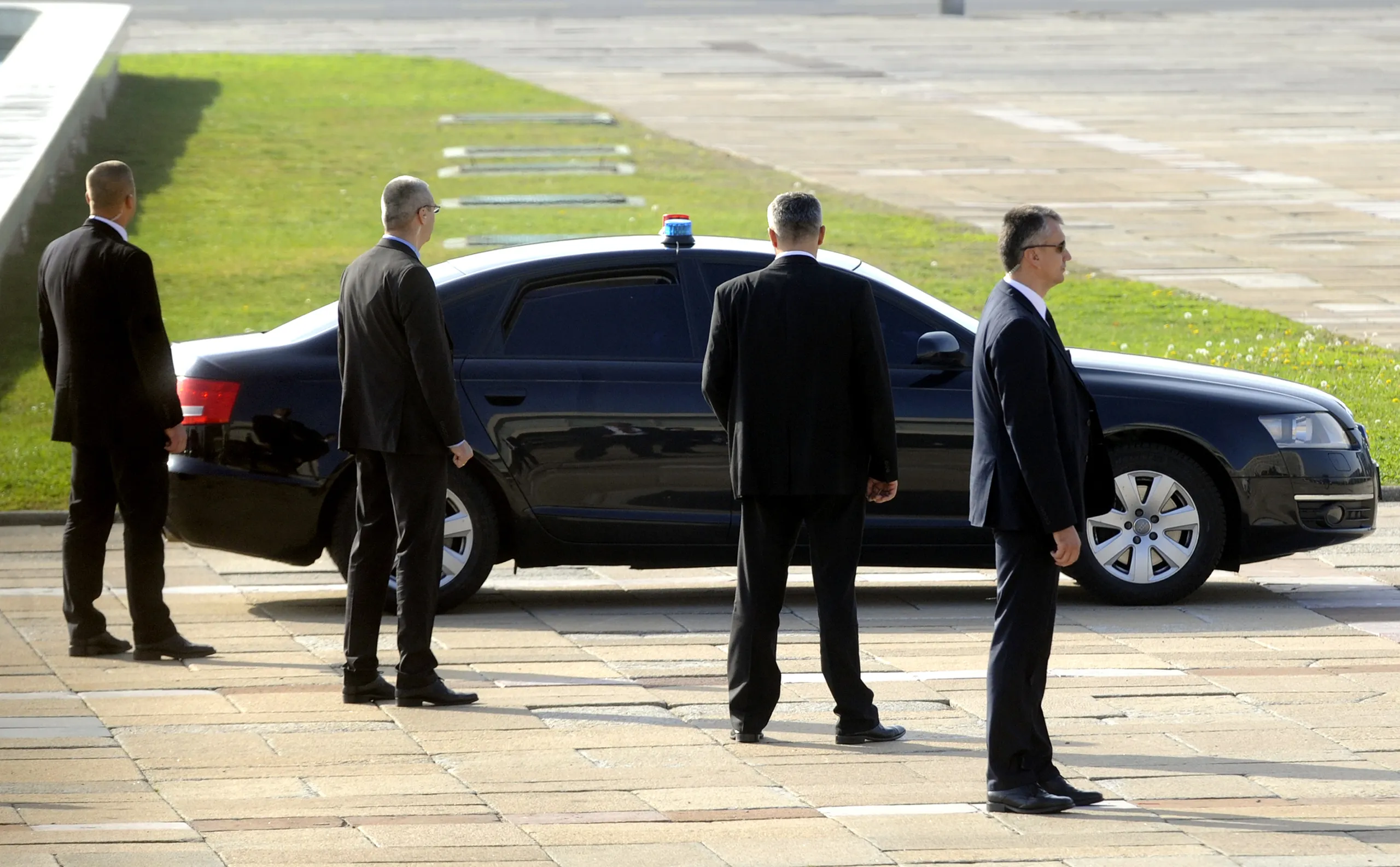
A standard close protection engagement in Mexico City typically includes a security driver operating a locally inconspicuous vehicle, route planning with alternatives, advance of venues where meetings will be held, and liaison with your hotel’s own security team. Armed protection is available and used by senior executives in certain sectors, but it requires specific licensing. The level of protection appropriate to your profile depends on who you are, what sector you work in, who knows you are coming, and where your meetings are.
For security driver services in Mexico City, see our Mexico City service page. If you are assessing whether you need personal protection for a specific visit, our executive protection overview sets out the factors that inform that decision.
Practical Steps Before You Travel
- Read the current UK FCDO or US State Dept advisory for Mexico before departure
- Book accommodation in Polanco, Lomas, Santa Fe, or on the Reforma corridor
- Pre-arrange airport transfers through a known provider, not on-the-day
- Do not announce travel dates or hotel names on social media
- Register with your embassy if staying more than a few days (FCDO LOCATE service; US Smart Traveler Enrolment Program)
- Know the emergency number: 911 in Mexico
- Keep cash withdrawals small and use bank ATMs inside hotel lobbies or shopping centres, not street-facing machines
Mexico City rewards preparation. It does not punish the prepared business traveller disproportionately. But it does punish complacency.