Security Intelligence
Is Karachi Safe for Business Travel? A 2026 Risk Assessment
Karachi is Pakistan's commercial capital and a major port city with a security environment that has changed significantly since the peak violence of the early 2010s.
Travelling somewhere high-risk? Speak with a security consultant.
Karachi is Pakistan’s financial and commercial capital, a port city of 15-20 million people (estimates vary widely), and the headquarters of Pakistan’s banking, textiles, and trading sectors. It is a city that international business visitors have historically either avoided entirely or approached with extensive security arrangements. The accurate 2026 picture is more complex than either of those positions.
How Karachi’s security environment has changed
Karachi experienced some of the worst urban violence of any major city in the world in the early 2010s. Political party militias, organised criminal gangs, and sectarian militant groups made the city genuinely extremely dangerous. The turning point was Operation Cleanup, the Pakistan Rangers paramilitary intervention from 2013 onwards, which substantially reduced the organised violence that defined that period.
The US State Department currently rates Pakistan at Level 3 (Reconsider Travel) rather than Level 4 (Do Not Travel) for most of the country, with specific Level 4 designations for border areas and FATA. The FCDO’s Pakistan advisory distinguishes between areas to avoid entirely and areas where essential travel is possible with appropriate precautions.
This is not a clean bill of health. Karachi’s security environment remains genuinely elevated by international comparison. But the framing of Karachi as categorically off-limits for corporate travel is now less accurate than it was a decade ago, and businesses with genuine commercial reasons to be there are increasingly present with appropriate security arrangements.
The current threat picture for business visitors
For corporate visitors operating in the DHA and Clifton areas of southern Karachi, the primary risks are: vehicle crime and opportunistic robbery during ground movements; the residual terrorism threat that affects all major Pakistani cities; occasional politically-driven unrest that can create access and movement problems without specifically targeting foreign nationals; and the specific profile-based risks for executives in energy and infrastructure sectors.
The kidnap risk for foreign executives is documented but is not at the Lagos or Bogota frequency level for standard corporate profiles. For executives with high-visibility HNWI profiles or in sectors with local political dimensions, a formal kidnap risk assessment is appropriate.
What professional security looks like in Karachi
Private security in Pakistan operates in a regulatory environment shaped by provincial legislation and by coordination with the security services. The Rangers presence in Karachi creates a specific operating context: any close protection arrangement operates alongside the existing government security infrastructure rather than independently of it.
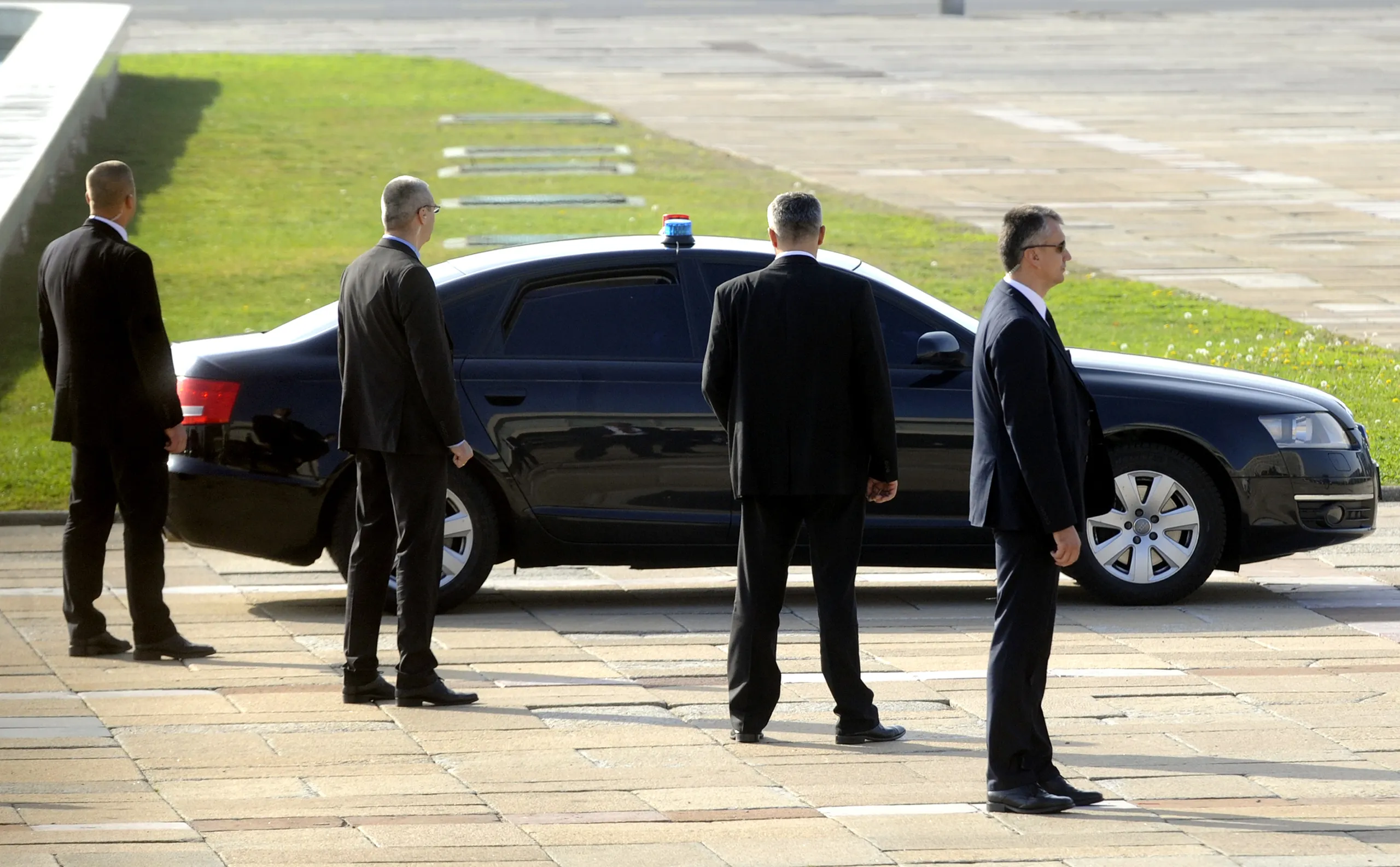
For most corporate visits, the operational model is: pre-travel threat assessment, vetted security driver with operations controller coverage for all movements, accommodation in the DHA or Clifton international hotel cluster, and close protection officers for any principal with an elevated profile or for movements outside the corporate belt.
For related services see our Karachi city page and our executive protection service overview.
Frequently Asked Questions
Request a Consultation
Describe your security requirements below. All enquiries are confidential and handled by licensed consultants.
Your enquiry has been received. A security consultant will contact you within 24 hours to discuss your requirements.