
Travelling somewhere high-risk? Speak with a security consultant.
Saudi Arabia is receiving more corporate visitors than at any point in its recent history. Vision 2030, the Kingdom’s economic transformation programme, has attracted tens of billions in foreign investment and a corresponding flow of executives, consultants, and project managers. NEOM, the Diriyah masterplan, ROSHN, and a dozen other megaprojects have offices in Riyadh that were not there three years ago.
With that commercial opening has come a question that many visitors are asking, sometimes quietly: what does the security picture actually look like, and do I need professional protection?
The honest answer is that Saudi Arabia is not uniformly dangerous. For most visitors conducting normal business in Riyadh or Jeddah, the ambient risk is manageable. But it is not absent, and the risk profile has changed in recent years in ways that matter.
The Current Threat Environment
The most publicly visible threat to visitors in Saudi Arabia is the residual risk from the Yemen conflict. Houthi forces have launched ballistic missiles and drone attacks at Saudi targets repeatedly since the conflict began. Riyadh has been targeted. King Khalid International Airport has experienced incidents. Oil infrastructure at Abqaiq and Khurais suffered significant damage in the 2019 attack attributed to Houthi forces.
For the corporate visitor in Riyadh’s CBD, the immediate threat from ballistic attack is lower than these headlines might suggest. Attacks have concentrated on infrastructure, military assets, and occasionally airports. Hotels and commercial districts in central Riyadh have not been primary targets. But the threat is not zero, and a security briefing for executives travelling to Riyadh should address it directly, including shelter-in-place protocols and what the alert systems are.
Beyond the conflict-related risk, the UK FCDO notes an ongoing terrorism threat in Saudi Arabia, with attacks having targeted foreign nationals, security forces, and places of worship. The risk is not limited to the border regions, and the FCDO’s advice reflects that: it advises against all travel within 10km of the Yemen border and against all but essential travel to Riyadh province as well as the southern provinces (updated 10 October 2026).
Crime against foreign nationals in Riyadh is comparatively low by regional standards. Petty theft is uncommon. Express kidnapping is not a documented threat in the way it is in Lagos or Mexico City. The personal security risk in Saudi Arabia for most corporate visitors is not primarily from street crime.
The Regulatory Environment for Private Security
Saudi Arabia’s private security sector is regulated by the Ministry of Interior. Private security companies must be licensed under the Kingdom’s framework, and foreign operators cannot simply arrive and work.
For practical purposes, this means:
International providers must operate through licensed local partners or Saudi-authorised entities. Ask any security company how their in-Kingdom operations are structured. A credible provider will have a clear answer and a named Saudi-licensed entity they work with. A provider that is vague on this point should be pressed hard.
Armed protection requires specific authorisation. It is available for senior principals with demonstrable need, but it is not the default, and it requires engagement with your security provider well in advance of travel.
Cultural competency is operational. Saudi Arabia’s social norms affect how a close protection team operates: mixed-gender arrangements require specific planning, public behaviour by protection officers must conform to local expectations, and legal knowledge around physical intervention and communications equipment matters. A provider with genuine in-Kingdom operational history will handle this as standard. A provider without that experience will not.
What Executive Protection in Riyadh Looks Like
For executives requiring protection in Riyadh, a standard engagement involves:
Pre-travel threat assessment. What is your specific risk profile? Sector, seniority, public profile, announced travel, nature of meetings. The threat briefing should cover the current ballistic/drone risk picture, terrorism status, and any specific sector-related risks.
Arrival protocol. King Khalid International Airport arrival with a vetted driver in a locally inconspicuous vehicle. No branding on the vehicle. Direct transfer to a Riyadh’s diplomatic quarter hotels or the business district. Route pre-planned.
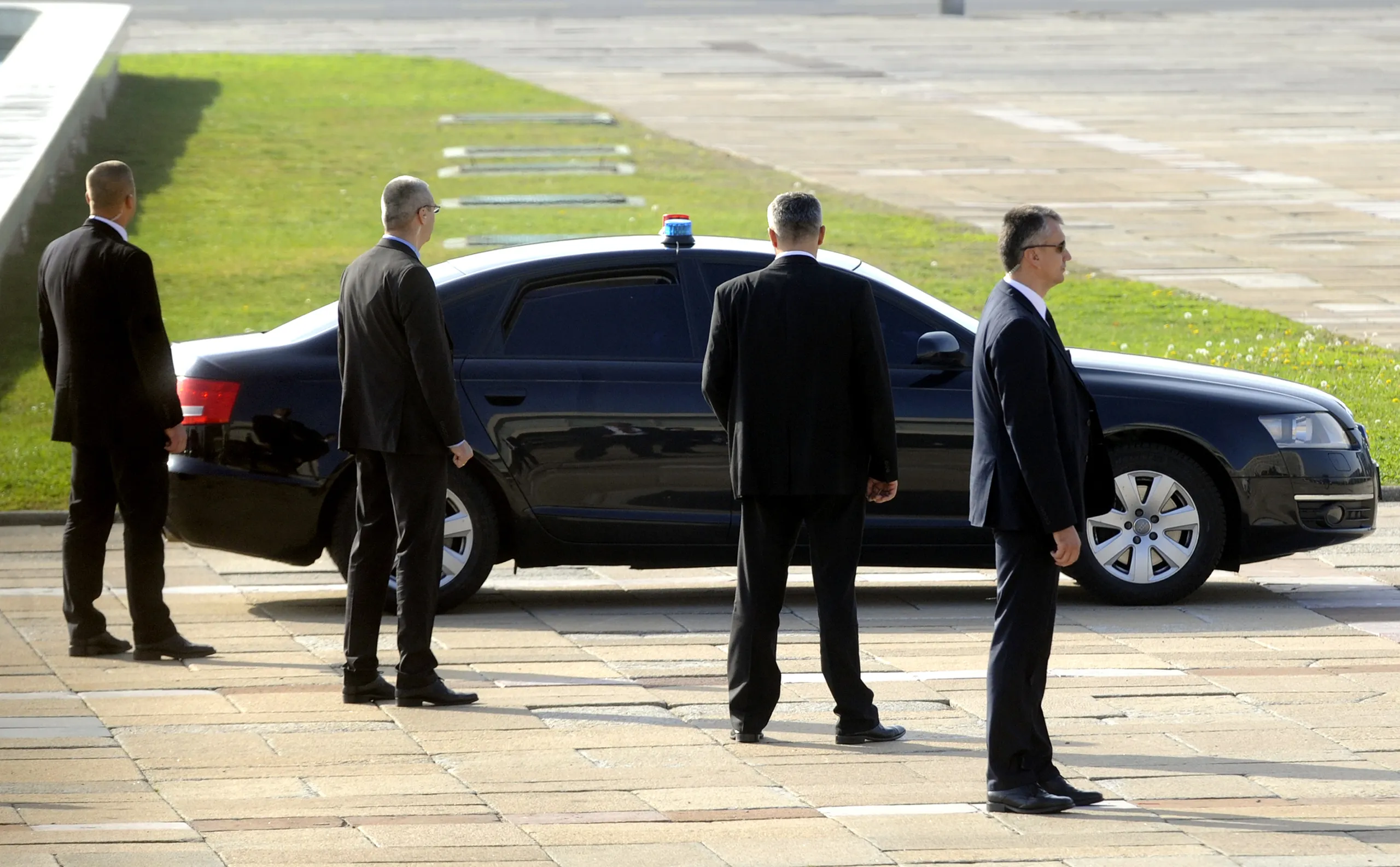
Close protection officer. For senior principals, a Saudi-experienced CPO provides venue security and accompanies the principal at meetings, events, and site visits. This officer will have in-Kingdom experience and cultural awareness to operate without drawing attention.
Communications. Throughout the visit, coordination with the client’s own travel risk management team and the hotel security team. Protocols for the relevant emergency scenarios, including how to respond to a missile alert.
Departure escort. Return to the airport with the same pre-planned approach.
For executives making longer visits or working outside Riyadh proper, additional planning is required, particularly for travel toward the southwest.
For full service details and enquiries, see our Riyadh executive protection page and our service overview for executive protection.