
Travelling somewhere high-risk? Speak with a security consultant.
Johannesburg’s private security industry is one of the largest and most developed in Africa. By some estimates, the ratio of private security personnel to police in South Africa is over four to one: a function of decades of elevated crime requiring the private sector to fill gaps the state cannot. For the corporate traveller, this means a market with genuine professional operators and with operators who trade on the appearance of professionalism without the underlying capability.
Knowing what a proper Johannesburg close protection engagement looks like is the starting point for selecting the right provider.
Why Johannesburg Warrants Professional Security
South Africa’s crime statistics are published quarterly by the South African Police Service. Gauteng province, which contains Johannesburg, consistently records among the country’s highest carjacking, robbery, and residential burglary figures. The city has made measurable progress in some categories, but the absolute risk level remains materially elevated by any international standard.
For senior executives, the specific risks are: carjacking on routes between the airport and Sandton, targeted robbery at traffic stops, and in specific sectors (mining, finance, resources), the kidnapping risk that affects those perceived as high-value targets. The risk is not uniform across the city. Sandton and Rosebank are different environments from Soweto or the CBD. But the assumption that Sandton is simply safe is incorrect.
What a Professional Johannesburg EP Engagement Involves
A serious close protection engagement in Johannesburg has recognisable components. Their presence or absence is the clearest signal of a provider’s actual capability.
Pre-deployment threat assessment. Before the principal arrives, the security team should have conducted a written assessment: current threat level for the specific sector and profile, any intelligence relevant to the visit dates, venue assessments for scheduled meetings, and a draft security plan. If a provider cannot describe this process specifically, they are not conducting it.
Airport arrival protocol. OR Tambo arrivals are a concentration point for carjacking targeting. A professional team coordinates inside-terminal collection, confirms vehicle and driver identity to the principal before approach, and has the route to Sandton pre-planned with alternatives. This is the standard, not a premium addition.
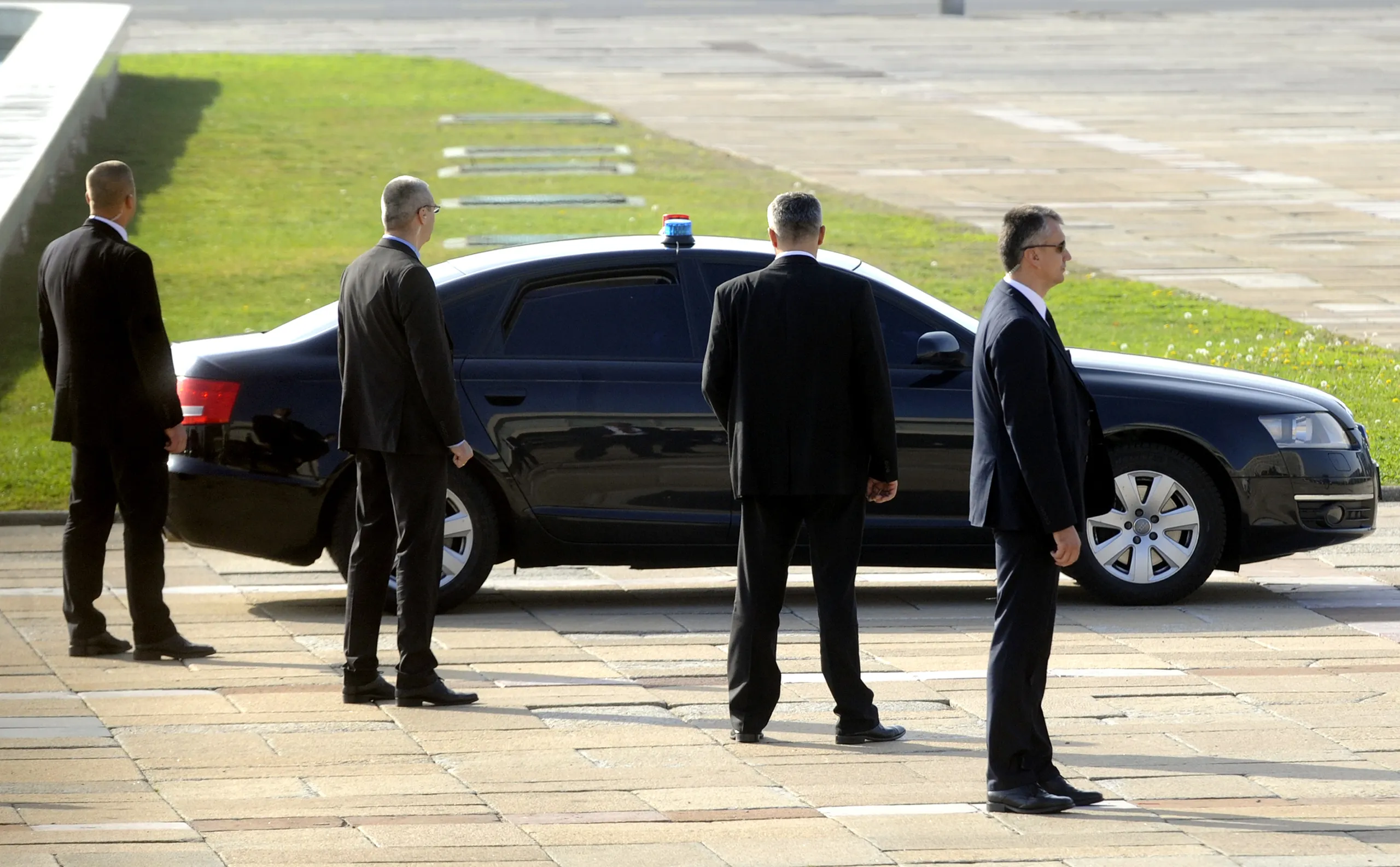
Vehicle selection and configuration. The vehicle should be locally inconspicuous: not a branded luxury transfer that broadcasts value. Tinted windows, locally registered plates, no identifying branding. The driver and CPO should be in direct communication throughout.
Route intelligence. A Johannesburg security driver knows which N3 ramps have documented incident history, which times of day carry the highest carjacking risk, and when to deviate from the GPS route. This knowledge is not generic: it comes from operating in the city consistently.
Venue protocols. Before each meeting, a competent CPO will have assessed the venue: access points, emergency exits, vehicle access to the entrance, proximity to medical facilities. This takes 20 minutes and materially improves the quality of the security plan.
Communications chain. The driver and CPO are in contact with an operations controller throughout the assignment. If there is an incident, there is a point of contact with full situational awareness and established escalation procedures.
Armoured Vehicles: When and Which
Johannesburg is one of the cities where armoured vehicle hire is a practical and frequently used option for senior principals. The carjacking environment makes ballistic protection relevant for specific profiles.
Armoured vehicles in the South African market range from B4-rated saloons (handgun protection) to B6 SUVs (rifle and light fragmentation). For most corporate executives, a B4 or B6 vehicle with a trained driver provides appropriate protection without the profile of a full military-grade vehicle.
Armoured vehicles cost more and move differently from standard vehicles. Drivers trained specifically on armoured vehicles (the weight and handling characteristics differ significantly) are the relevant skill set, not general security drivers.
PSIRA: the Regulatory Baseline
Every close protection officer and security company operating in Johannesburg must hold current PSIRA registration under the Private Security Industry Regulation Act (Act 56 of 2001). Grade A is the required level for close protection. Armed officers need additional SAPS authorisation.
Verify: ask for PSIRA registration numbers for the specific officers on your detail. Check them at psira.co.za. The verification takes two minutes and is the clearest signal of whether a provider is operating within the legal framework.
For close protection and security driver services in Johannesburg, see our Johannesburg city page and our guide to bodyguard licensing in South Africa.