
Security Intelligence
Executive Convoy Operations Planning Guide | CloseProtectionHire
Multi-vehicle convoy operations for executive close protection: vehicle selection, formation design, communications, counter-ambush drills, route planning, and convoy command for high-risk environments.
Written by James Whitfield
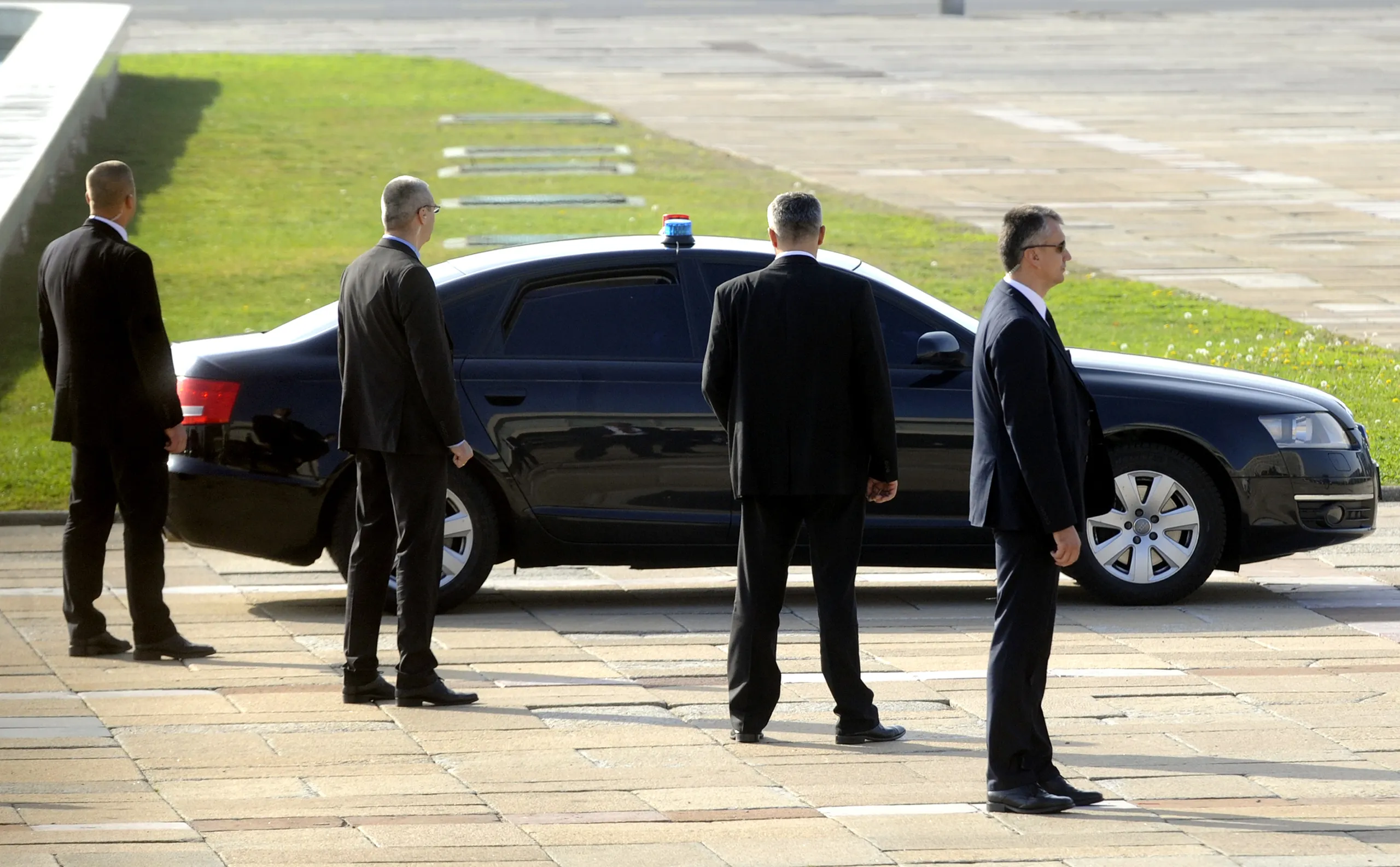
Multi-vehicle convoy operations represent the high end of close protection capability and the highest operational complexity that a personal protection team manages. They require coordinated vehicle selection, crew briefing, communications architecture, counter-ambush drill rehearsal, and route intelligence – all before the principal is in the vehicle.
This guide covers the practical planning and execution requirements for executive convoy operations in high-risk environments. It is written for security professionals planning convoy movements, not as a replacement for certified close protection and vehicle operations training.
When to Use a Convoy
The decision to move a principal in a multi-vehicle convoy rather than a single protected vehicle is an operational decision driven by threat assessment, not a status preference. A high-profile convoy in a P1 city can attract more attention than it deters. The question is: what specific threat requirement does the convoy formation address that a single vehicle cannot?
The operational justifications for convoy deployment are:
Elevated threat intelligence: Specific intelligence indicating planning activity against the principal – not general city-level risk, but intelligence specific to the principal or their movement pattern. A single armoured vehicle with a skilled driver and PPO provides significant protection against opportunistic attack. A convoy is warranted when the threat involves coordinated multiple vehicles or multiple personnel with a defined target and method.
Principal group movement: Moving a principal with family, a delegation, or colleagues who cannot all travel in a single vehicle requires a convoy by definition. Vehicle allocation within the convoy must match the principal hierarchy – the decision about which vehicle the primary principal travels in is a security decision, not a convenience decision.
Reaction capability: In environments where immediate medical or counter-attack support may be required, the follow vehicle provides capability that a single crew cannot. This is the primary function of the Follow position in a standard three-vehicle formation.
Advance intelligence function: In P1 city environments with complex route networks and documented ambush risk, an advance vehicle provides a pre-movement route check capability that has no substitute. The advance vehicle’s primary value is not firepower – it is time, delivered to the principal vehicle as early warning.
Vehicle Formation Design
The standard three-vehicle executive convoy formation is:
Advance (Scout): Travels 1-3 minutes ahead of the principal vehicle. Driven by an experienced driver familiar with the route and the target indicators for route compromise. The advance vehicle communicates continuously on the intra-convoy channel, reporting route status, obstacles, and any indicators of surveillance or pre-positioning. On arrival at the destination, the advance conducts a quick assessment before the principal vehicle is committed.
Principal Vehicle: The primary protected vehicle carrying the principal and their personal protection officer (PPO). The driver’s role is vehicle control and route execution – the PPO’s role is principal security, not co-navigation. In armoured vehicle deployments, the principal vehicle should be the highest-specification vehicle in the formation.
Follow: Maintains a position immediately behind the principal vehicle, close enough to provide counter-ambush support and push capability but not so close as to create a linked vehicle block in a low-speed ambush scenario. The follow vehicle crew has the counter-attack or immediate action function in a contact scenario.
In higher-threat environments, a four-vehicle formation adds a dedicated Lead vehicle between the advance and the principal vehicle, and the advance takes a longer-range intelligence function. Five-vehicle formations are the maximum practical size for urban operations – beyond this, the convoy creates more profile risk than it mitigates.
Communications Architecture
Communications failure in a convoy operation is an immediate safety risk. The communications plan must be established, tested, and confirmed before departure – not during.
Primary channel: Encrypted digital radio (Motorola MOTOTRBO, Kenwood NX series, or equivalent professional DMR equipment). All vehicle crew leaders hold the intra-convoy channel. The convoy commander controls the command channel. Radio discipline – net silence except for operational transmissions, standard callsign format, brevity codes for routine status updates – must be pre-briefed.
Secondary channel: GSM mobile or satellite, depending on coverage. In P1 cities with documented GSM unreliability in certain areas – Lagos mainland, parts of Karachi, eastern Manila – pre-planned satellite backup using Iridium or Inmarsat provides the fail-safe. The operations centre should have both the primary and secondary channel contact details for each vehicle.
Code words: A simple code word set – for “abort and return,” “contact ahead,” “contact behind,” “proceed to fallback point” – enables compressed communications under stress that reduces the risk of miscommunication at a critical moment.
Pre-departure radio check: Every crew member, every vehicle, on every channel, before departure. A convoy that starts with failed communications is not ready to move.
Route Intelligence and Advance Assessment
Route intelligence is the single most cost-effective pre-departure investment. A 30-60 minute route assessment before the principal vehicle moves can identify:
Ambush-suitable terrain: Choke points, road narrowings, elevated positions above the route, forced-stop points (traffic signals, gates, toll booths) where the principal vehicle is stationary for a predictable period. Routes with multiple ambush-suitable features require a specific security case for use – not automatic clearance.
Surveillance indicators: Individuals or vehicles that are stationary at unusual positions relative to the route, following vehicles, or watching choke points. A surveillance detection route (SDR) methodology can be applied on the advance run to identify whether the advance vehicle itself is being followed.
Alternate routes: A minimum of two alternate routes to any destination should be identified before departure. Alternate routes should be confirmed clear – not just identified on a map – before they are relied upon as diversion options.
Fallback points: Pre-designated locations where the convoy can consolidate if it loses communication with a vehicle or if an immediate action is required. Fallback points should be defensible positions – a police station, a hotel with security, or a pre-vetted location known to the operations centre.
The day-of advance vehicle route run, or a dedicated advance survey run on the preceding day for high-threat movements, is the operational standard for P1 city convoy operations. This function cannot be replaced by remote GPS mapping.
Counter-Ambush Procedures
The counter-ambush drill for a convoy is the most safety-critical procedure that the crew must brief, rehearse, and internalise before a high-threat movement. The drill must be specific to the route, the vehicle types, the crew size, and the known threat typology.
The core principles are consistent across doctrine:
Immediate action – forward: If the ambush is triggered at or behind the principal vehicle and the route forward is clear, the principal vehicle accelerates through the kill zone. The follow vehicle moves to block or distract the threat element. The advance vehicle – if ahead of the kill zone – calls in the contact and clears the route forward.
Immediate action – reverse: If the forward route is blocked, the principal vehicle reverses immediately. The follow vehicle creates space and may need to mount a pavement or median. All vehicles move to the pre-briefed fallback point.
Isolated vehicle: If a single convoy vehicle is ambushed and separated from the formation, the protocol for the isolated crew must be pre-briefed. The principal vehicle does not stop to assist – it continues to the fallback point or the destination.
The trigger for the counter-ambush drill is an unambiguous signal from the convoy commander. Crew must not initiate the drill on their own judgement without the command signal except in the event of direct fire.
For the broader armoured vehicle context, see our armoured vehicles for executive protection guide. For the personnel selection and training standards for convoy crew, see our executive protection team structure guide.
Sources
ASIS International: Executive Protection Guidelines 2024. CPNI (Centre for the Protection of National Infrastructure): Vehicle Security Guidance 2024. TPIM (Tactical Protection Instructor Manual) – CPO Industry Training Standard, 5th Edition. OSAC: Vehicle Security Awareness 2024. Control Risks: Protective Security Advisory 2025. FCDO: Security Risk Management for Overseas Visits 2024. ISO 31030:2021 Travel Risk Management – Section 7 (Protective Security). NaCTSO: Vehicle as a Weapon Attack Planning Guidance 2024. HEAT (Hostile Environment Awareness Training) Practitioner Consortium: Convoy Operations Standard 2023.
James Whitfield is a Senior Security Consultant with 20 years of experience in close protection, convoy operations planning, and executive security management across high-risk environments globally.
Key takeaways
Low-profile single vehicle protection outperforms a high-profile convoy in most urban environments
A multi-vehicle convoy announces the principal's location, creates road presence that generates attention, and in some P1 cities is more likely to attract targeting than to deter it. Low-profile protection in an unmarked vehicle with a single driver and PPO is the operationally sound default for most corporate executive protection. Convoy operations are for environments where deterrence or reaction capability is the primary requirement.
The advance vehicle function is more valuable than additional follow vehicles
An advance vehicle that identifies a route blockage or ambush position and communicates it to the principal vehicle before the principal reaches the threat provides response time that cannot be recovered after contact. Where resources are constrained, investing in an effective advance function -- even a single driver with communications -- provides higher protection value than a larger follow-vehicle element.
Counter-ambush drills must be briefed and rehearsed before every high-threat movement
A counter-ambush drill that has not been rehearsed by the actual crew on the actual route is a plan that will not be executed correctly under stress. Every convoy crew must complete a full verbal pre-brief and, where possible, a dry-run of the trigger points and immediate action sequence before the movement commences.
Vehicle selection determines the physical limits of the convoy's protection capability
A convoy of unarmoured vehicles provides no ballistic or blast protection -- only speed and reaction. Armouring provides protection against defined threat levels (B4, B6, B7 ratings) but adds weight that affects the vehicle's performance in a counter-ambush situation. The vehicle selection decision must be driven by the specific threat typology identified in the threat assessment, not by availability or cost alone.
Pre-departure route intelligence is the most cost-effective convoy security investment
A convoy that departs into an unknown route situation is relying on reactive capability alone. A pre-departure route assessment -- either by the advance vehicle on the day, or by a dedicated route survey the prior day -- identifies obstacles, ambush-suitable terrain, alternative routes, and the current security incident picture. This investment requires 30-60 minutes and can determine whether the route is viable or requires modification before the principal is committed.
Frequently Asked Questions
Request a Consultation
Describe your security requirements below. All enquiries are confidential and handled by licensed consultants.
Your enquiry has been received. A security consultant will contact you within 24 hours to discuss your requirements.
