
Security Intelligence
Close Protection in South America: Operating in Brazil, Peru, Chile, and Beyond
South America presents a distinct close protection environment. A senior security consultant examines threat profiles, legal frameworks, and operational standards across the continent's major markets.
Written by James Whitfield
South America is not a uniform security environment. The continent spans some of the world’s most dangerous cities and some of its safest, within a distance that could be a short flight. An executive travelling from Santiago to Caracas has moved from a relatively low-risk corporate environment to one of the most dangerous urban environments on the planet. Between these extremes lies the operating range for most South American close protection work.
This article covers the key markets – Brazil, Peru, Colombia, Chile, Argentina, Ecuador, and Venezuela – with specific focus on what executives and their security teams need to understand before operating on the continent.
The Regional Threat Picture
The United Nations Office on Drugs and Crime (UNODC) Global Study on Homicide 2023 recorded the Americas as the region with the world’s highest homicide rate. Within that regional average, South America accounts for a substantial share of the total. The continent has a concentrated crime geography: Brazil alone accounts for over 40,000 homicides annually. Venezuela, despite its smaller population, records rates that consistently rank among the highest globally.
For corporate executives, the directly relevant threats are more specific than headline homicide statistics suggest:
Express kidnap. Documented in Sao Paulo, Rio de Janeiro, Lima, Bogota, Caracas, and several secondary cities, express kidnap is the most common form of targeted crime affecting executives and business travellers. The OSAC Brazil Country Security Report 2024 identified express kidnap as the primary security concern for business travellers in greater Sao Paulo. Incidents typically involve forced entry into or approach of a vehicle, brief detainment, ATM withdrawals, and release – though violence is not uncommon and some incidents escalate.
Carjacking. Organised carjacking rings operating in major South American cities target specific vehicle types – armoured vehicles are sometimes specifically targeted for the value of the vehicle and the implied wealth of the occupant. The Brazilian state of Rio de Janeiro recorded over 10,000 vehicle thefts in 2024. The threat requires that protection programmes use operational security around vehicle selection, parking, and route management, not just the presence of an armoured vehicle.
Full kidnap for ransom. While less common than express events, full kidnap for ransom targeting business executives has remained active, particularly in Venezuela (the global K&R hotspot for several years running, per Control Risks’ annual report), parts of rural Colombia, and in certain Brazilian cities. The kidnap insurance market remains active for executives with significant South American exposure.
Political and regulatory risk. Venezuela and, to a lesser degree, Bolivia and Nicaragua present politically motivated detention risk for foreign executives. Venezuela’s government has used detention of foreign business figures as a negotiating tool. The FCDO consistently rates Venezuela at its highest risk category. Several foreign nationals have been detained in connection with business disputes without recourse to due process.
Brazil
Brazil is the continent’s largest market and its most complex security environment for corporate operations. The country’s vast geography means that risk varies dramatically between states and between urban and rural environments.
Sao Paulo. The country’s financial and commercial centre. Despite improvements in security over the past decade, greater Sao Paulo records high rates of express kidnap, carjacking, and armed robbery. The Rota Dos Bandidos – organised carjacking networks – specifically target vehicles in high-income areas of the city. Security planning for Sao Paulo typically involves armoured vehicles, vetted security drivers, pre-planned routes with alternatives, and careful selection of accommodation and venues.
Rio de Janeiro. The tourist and event profile of Rio creates specific security dynamics. The city’s favela geography means that some areas are controlled by drug trafficking organisations (DTO) or milicia groups (former or current law enforcement operating extortion networks). Certain routes into the city from GIG airport pass through areas of elevated risk depending on current conflict dynamics. Event security during Carnival and other major events requires specific advance planning.
Brasilia and secondary cities. The federal capital has a lower ambient crime rate than the major commercial cities but requires standard precautions. Secondary cities – Salvador, Fortaleza, Belo Horizonte, Recife – vary significantly. Several have recorded high homicide rates and require city-specific intelligence rather than application of a Sao Paulo template.
Legal framework. Brazilian private security is regulated by Lei No 7.102/1983 and subsequent ministerial portarias issued by the Ministry of Justice. Commercial close protection requires a Policia Federal licence. Armed CP operatives require specific authorisation. The DPF (Departamento de Policia Federal) maintains the licensing registry. Operators without current DPF authorisation are working illegally.
Peru
Peru has seen a sustained deterioration in its security environment since 2022. The OSAC Peru Country Security Report 2025 noted that Lima now records homicide rates and express kidnap incidents at levels significantly above historical baselines.
Lima. The capital concentrates most corporate activity. Miraflores and San Isidro districts are the primary business and residential zones and have lower ambient risk than most of the city. The airports – Jorge Chavez International – has documented instances of express kidnap in the immediate vicinity, making arrival and departure particularly sensitive periods. Unlicensed taxis and rideshare platforms with inadequate vetting are documented entry points for express kidnap incidents. Vetted, pre-arranged ground transport is essential.
Mining and resource sector. Peru is a major copper, silver, and gold producer. Resource sector executives operating near extraction sites – in highland regions of Cajamarca, Cusco, Ayacucho – face a different risk profile from Lima-based corporate travel. Community conflict around mining operations has escalated into violent confrontation on multiple occasions. Social licence to operate is a genuine security function in these environments, not just a CSR consideration.
Legal framework. SUCAMEC (Superintendencia Nacional de Control de Servicios de Seguridad, Armas, Municiones y Explosivos de Uso Civil) regulates private security operatives in Peru. Close protection requires SUCAMEC registration. Armed operatives require a firearms licence from SUCAMEC in addition to the security licence.
Colombia
Colombia’s security environment has improved dramatically since the peak conflict years of the 1990s and early 2000s. Bogota and Medellin now host significant foreign investment and corporate activity. The peace process with FARC-EP (finalised 2016) materially reduced the conflict footprint in many regions. However, several caveats apply.
Residual armed groups. FARC dissidents (particularly the Estado Mayor Central and Segunda Marquetalia factions), ELN (Ejercito de Liberacion Nacional), and organised criminal groups (BACRIM/Clan del Golfo) remain active in specific regions – particularly the Pacific coast, southern Colombia, and border areas with Venezuela and Ecuador. Corporate executives operating in these areas require specialist security input beyond standard urban close protection.
Bogota. The capital is a functional major city with an established corporate security market. Standard CP protocols apply: vetted vehicles and drivers, route management, accommodation security. The city’s altitude (2,600 metres) is a physical consideration for personnel and medical planning.
Legal framework. Colombia’s security sector is regulated by the Superintendencia de Vigilancia y Seguridad Privada (SuperVigilancia). Close protection operatives require SuperVigilancia licensing. Armed CP is common and legally available for appropriately licensed operators.
Chile and Argentina
Chile. Historically one of South America’s safest countries for corporate travel, Chile has seen a marked increase in organised crime since the late 2010s. Santiago records higher rates of armed robbery and vehicle theft than its historical baseline. The influx of organised criminal networks from Venezuela and elsewhere has changed the operating environment in ways that make pre-2020 risk assessments unreliable. For most corporate travel, close protection is not required but standard personal security protocols are warranted.
Argentina. Buenos Aires remains a manageable corporate environment with a well-established private security industry. The significant economic turbulence of recent years – hyperinflation, currency controls, poverty rates above 40 percent – has elevated ambient crime. Express kidnap is documented, primarily in the greater Buenos Aires area. The specific risk for visiting executives includes ATM security (peso denomination complexities mean cash management requires specific protocols) and accommodation security in non-traditional or lower-tier hotels.
Ecuador
Ecuador has undergone significant security deterioration since approximately 2023. The country’s traditionally low crime rates have been overwhelmed by gang violence linked to drug trafficking cartels operating near the Colombian border. Guayaquil and, to a lesser extent, Quito have recorded incidents of armed violence at levels previously unseen. The FCDO elevated its Ecuador advisory in 2024. For corporate travel, city-specific and area-specific intelligence is essential – parts of Ecuador remain manageable while others are not.
Venezuela
Venezuela is not a viable corporate travel destination for most purposes. The country consistently features in the top five for kidnap rate globally (Control Risks, 2025). The collapsed infrastructure, deteriorated law enforcement, and humanitarian crisis conditions mean that standard close protection resources are not adequate for managing the risk. For organisations with residual operational presence in Venezuela, specialist security providers with specific country expertise and established relationships are required, not general close protection providers.
Building a South American Programme
For organisations with regular executive travel across South America:
Tiered risk approach. Categorise destinations by risk level and apply appropriate security measures to each tier. Chile and Uruguay require standard travel security protocols. Brazil, Peru, and Colombia require close protection for most senior executives. Venezuela requires specialist assessment for any travel.
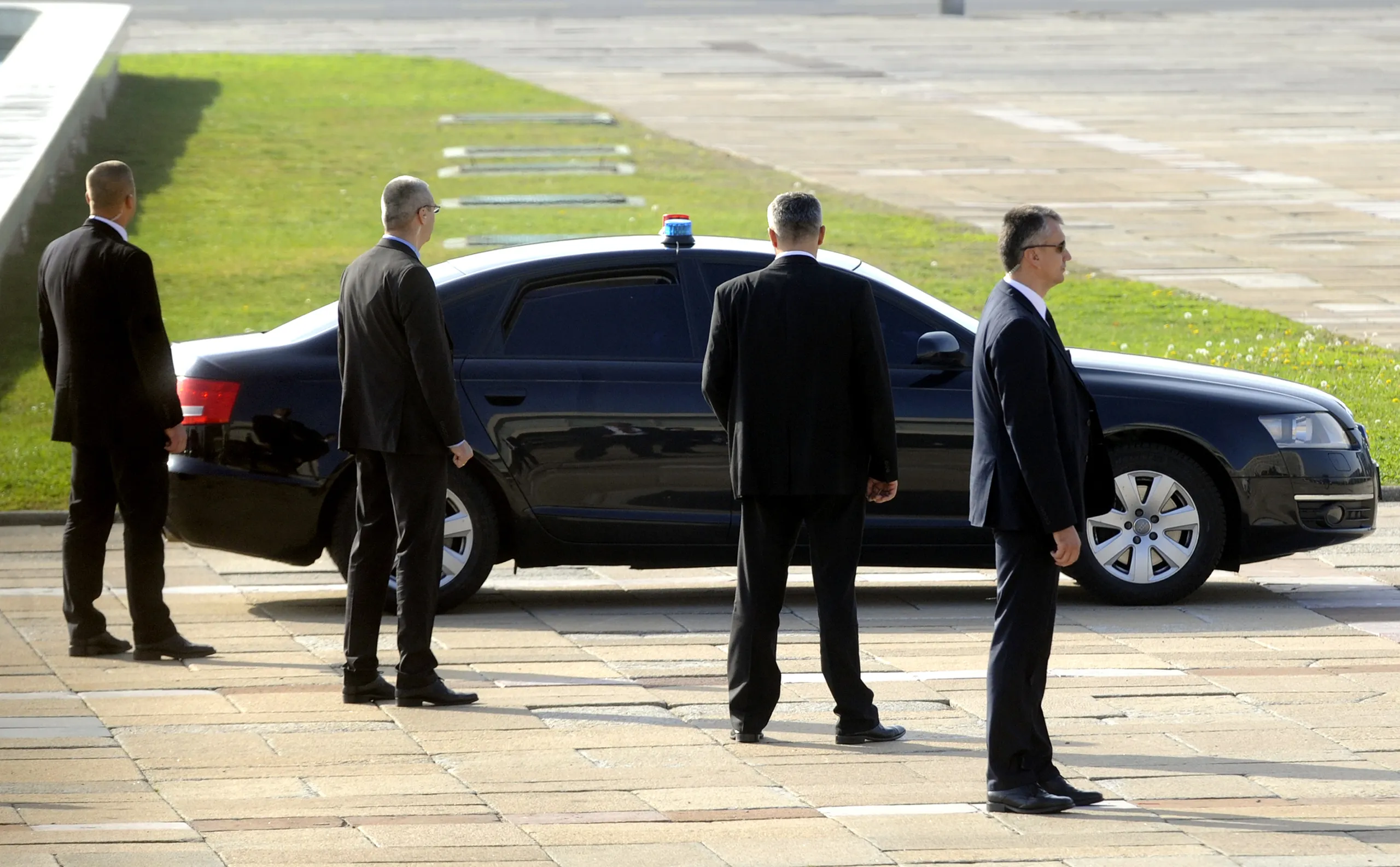
Vehicle infrastructure. Armoured vehicles to B4 or B6 standard (VPAM rating) are the norm for senior executives in Brazil, Peru, and Colombia. The security driver programme – including route surveys, pre-drive checks, and evasive driving training – is as important as the vehicle specification.
Local partner vetting. The South American private security market varies enormously in quality. International providers engaging local operators should verify licensing, conduct reference checks against comparable mandates, and maintain oversight of deployed personnel. The Voluntary Principles on Security and Human Rights are relevant for organisations operating in extractive industry contexts.
Embassy registration. All travel to South American markets should be accompanied by registration with the relevant embassy (FCDO LOCATE for British nationals, STEP for US nationals). In a kidnap or detention scenario, the embassy is the primary point of contact for crisis response.
For further reading, see our articles on executive security in Latin America and kidnap prevention for business travellers. For the five countries north of Colombia – Guatemala, El Salvador, Honduras, Panama and Costa Rica – see our close protection in Central America guide. For regional assignments that extend into the Caribbean – including Jamaica, Trinidad, Haiti, the Dominican Republic, and the stable financial hubs of Barbados and the Cayman Islands – see our close protection in the Caribbean Islands guide.
James Whitfield is a Senior Security Consultant with 20 years of experience in close protection and risk management across South America, Europe, and high-risk regions globally.
Key takeaways
South America has the world's highest regional homicide rate
UNODC data consistently places Latin America and the Caribbean above every other region for homicide. Within South America, Brazil, Venezuela, and Colombia account for a disproportionate share of incidents.
Express kidnap is the primary targeted crime in most major cities
Full kidnap-for-ransom events are less common than express kidnap -- short-duration events designed to extract immediate cash or electronic transfers. Sao Paulo and Lima have documented rates that are among the highest globally.
Vehicle-based protection is the operational standard
Most South American CP programmes are vehicle-centric. Good quality armoured vehicles, trained security drivers, and route management are the core of effective protection. Pedestrian-heavy formation work is less common.
Corruption within security forces is a material operational factor
In several South American markets, off-duty or corrupt police officers have been involved in organised crime and targeted attacks on executives. Vetting of locally contracted personnel requires particular diligence.
Local operators are essential, not optional
The political, cultural, and operational context across South America varies dramatically. An international CP firm deploying without local partner relationships and genuine country-specific knowledge creates more risk than it manages.
Frequently Asked Questions
Request a Consultation
Describe your security requirements below. All enquiries are confidential and handled by licensed consultants.
Your enquiry has been received. A security consultant will contact you within 24 hours to discuss your requirements.
