Security Intelligence
Close Protection for Government Officials: Protocols and Considerations
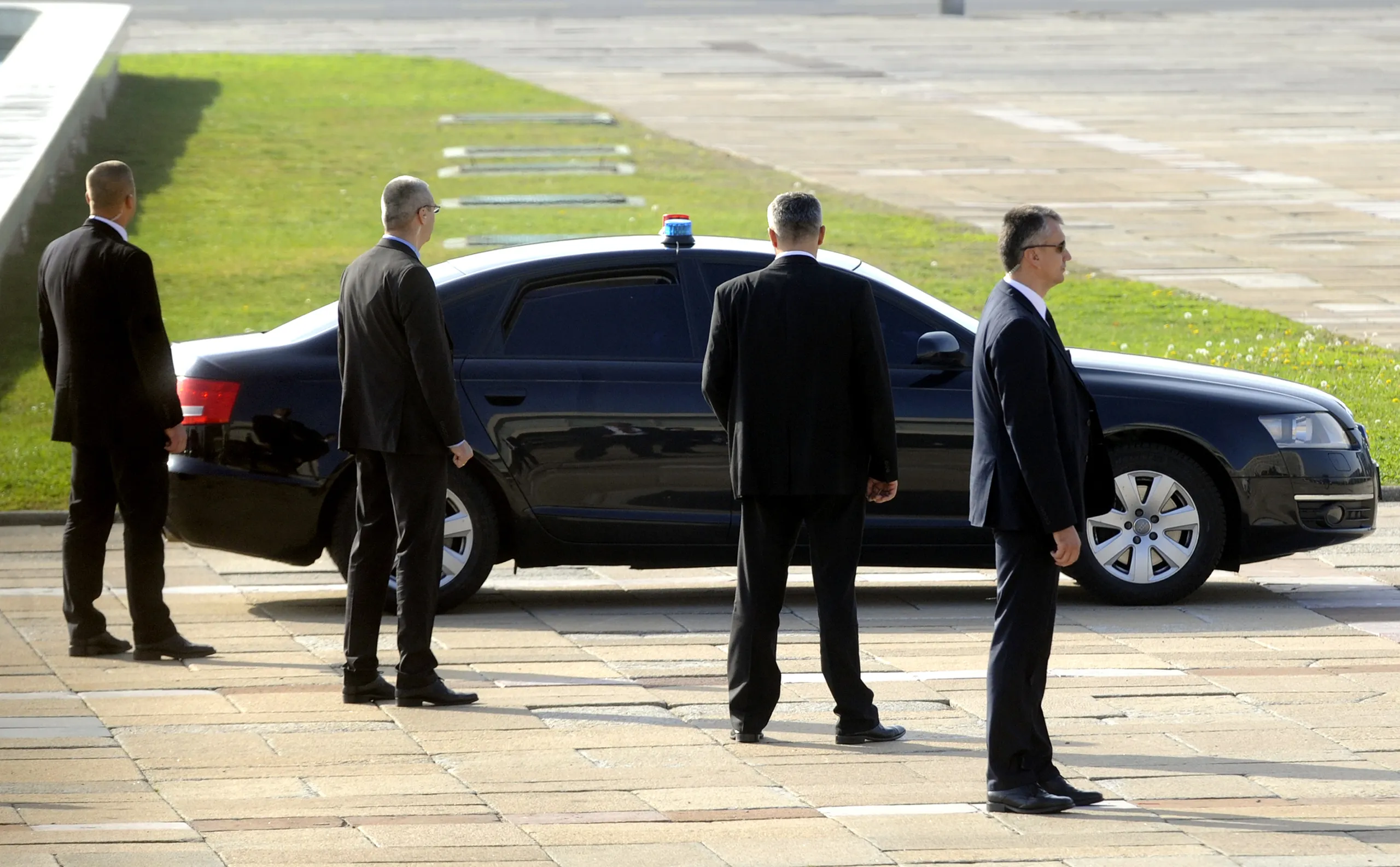
Security considerations specific to government officials requiring close protection. Covers threat profiles, the interface between state protection and commercial providers.
Travelling somewhere high-risk? Speak with a security consultant.
Security for government officials operates in a more complex environment than standard corporate close protection. The threat profile is often higher, the public exposure is greater, the protocol requirements are more demanding, and the interface with state security apparatus creates coordination considerations that do not apply in the private sector.
This article addresses the security environment for government officials and the role commercial close protection providers play within it.
Threat Profile for Government Officials
Government officials (elected representatives, senior civil servants, diplomats, ministers) face a distinct threat environment:
Ideologically motivated targeting. Officials with public policy positions attract targeting from ideological opponents. This ranges from harassment and protest to, at the extreme end, politically motivated violence. The threat is higher for officials associated with divisive policy areas: immigration, abortion, foreign policy.
State-sponsored threats. Senior officials involved in national security, foreign policy, or intelligence may face targeting from foreign state actors. This threat is assessed by state security services but requires commercial providers working alongside state protection to understand its existence.
Constituency-specific threats. Officials representing specific geographic areas or communities can attract threats connected to local grievances. This is often under-assessed relative to the official’s public profile.
Protest and harassment. Organised protest targeting officials’ homes, offices, and public appearances has increased across democratic countries. This is generally lower-intensity than targeted threat but creates operational complexity and can generate sudden escalation.
The State-Commercial Interface
For serving officials with state protection, commercial providers typically operate in a supporting role:
Local supplementation. A visiting dignitary whose home-country state protection team lacks local knowledge may engage local commercial operators to provide route intelligence, venue contacts, and liaison with local emergency services. The commercial element supports and does not lead.
Private travel. When officials travel privately, state protection may not be extended. Depending on the official’s assessed threat level, they may engage commercial providers for the private portion of travel.
Retired officials. Former senior officials (ex-heads of state, former intelligence chiefs, retired senior diplomats) often retain elevated threat profiles for years after leaving office. Commercial close protection is the appropriate response when state protection is withdrawn following retirement.
Unofficial engagements. Officials speaking at private events, attending personal functions, or travelling for personal reasons may engage commercial providers for specific engagements.
Protocol Considerations
Close protection for government officials requires awareness of official protocol in ways not relevant to corporate assignments:
- Entry and exit sequences from vehicles and buildings follow precedence rules that cannot be modified for security convenience without specific authorisation
- Positioning of protection officers in official settings (parliament, diplomatic events, state functions) is governed by host protocol
- Photography and media management at official events follows government communications rules that protection officers must not override
- Interaction with foreign officials and their security details requires understanding of diplomatic protocol
Officers assigned to government principals should be specifically briefed on protocol requirements for each assignment rather than applying standard commercial close protection positioning.
Coordination with State Security
When commercial providers work alongside state protection:
- State element takes precedence in command and coordination
- Commercial operators should establish clear briefing and communication protocols before the assignment begins
- Intelligence should flow from state to commercial (what is safe to share) but rarely in the other direction
- De-confliction of radio frequencies, vehicle positioning, and venue access requires advance coordination
Practical Considerations for Engagements
For commercial providers taking government official assignments:
- Confirm the scope: is this supplementary to state protection or independent?
- Establish the protocol requirements specific to the official’s position
- Obtain current threat assessment from the appropriate state security liaison
- Coordinate advance work with any existing security arrangements
- Brief all operators on protocol, communications protocols, and the command relationship with state protection
For close protection services for senior officials and visiting dignitaries, contact us directly to discuss requirements.
For tailored support on the issues covered here, see our executive protection service and bodyguard hire service.
Frequently Asked Questions
Request a Consultation
Describe your security requirements below. All enquiries are confidential and handled by licensed consultants.
Your enquiry has been received. A security consultant will contact you within 24 hours to discuss your requirements.