
Security Intelligence
Close Protection in Central America | CloseProtectionHire
Expert close protection in Central America covering Guatemala, El Salvador, Honduras, Panama and Costa Rica. Ground threat analysis and operational framework from senior consultants.
Written by James Whitfield
Central America sits at the intersection of two of the world’s most significant organised crime corridors. The Pacific-facing route brings cocaine north from Colombia and Peru through Panama, Costa Rica, Honduras, Guatemala and Mexico toward US markets. The Caribbean-facing corridor adds cartel-controlled maritime routes. For executive security planning, understanding this geography is not academic – it is the foundation of every threat assessment in the region.
The five countries covered here – Guatemala, El Salvador, Honduras, Panama and Costa Rica – present very different threat profiles. Panama City and San Jose are manageable for business travel with standard precautions. Tegucigalpa and parts of Guatemala City demand close protection support. El Salvador sits in an unusual middle ground: dramatically improved on paper, but held together by a political project with no guarantee of permanence.
Close protection in Central America operates under a consistent operational baseline: unarmed, vetted local drivers, local licensed security providers, ground transport discipline and pre-trip OSAC country report review.
Guatemala: Organised Crime Infrastructure and Daily Risk
Guatemala City is manageable for business operations but not for unprepared travel. The capital hosts embassies, multinationals and a functioning financial district. It also has a documented presence of Zetas-affiliated criminal networks, MS-13 and Barrio 18 gang activity in specific districts, and a pattern of armed robbery targeting business travellers who use unlicensed taxis or display visible wealth.
The CICIG (International Commission Against Impunity in Guatemala), which spent 13 years investigating state-level corruption and organised crime, was shut down by President Giammattei in 2019. Its investigations documented the depth of criminal penetration in state institutions. Since its dissolution, independent monitoring of corruption and organised crime has weakened.
InSight Crime and OSAC Guatemala both document that kidnapping for ransom operates in Guatemala, particularly targeting businesspeople perceived to have significant assets. Express kidnapping – short-duration abductions for ATM withdrawal or immediate cash transfer – is more frequent than extended-duration KFR. Both require the same pre-trip mitigation: no pattern-of-life predictability, no routine routes, no unauthorised transport.
Lake Atitlan and Antigua attract tourist visitors with manageable risk profiles. Northern Guatemala – the departments of El Peten, Izabal, Alta Verapaz and Huehuetenango – carries a materially different threat picture where criminal corridor control and proximity to Mexican cartel operations warrants FCDO elevated caution guidance.
Pre-trip review of OSAC Guatemala Country Security Report is mandatory. The Control Risks RiskMap 2025 rates Guatemala at High risk for most provinces and Critical for specific northern border areas. These ratings drive the close protection requirement, not general impression.
El Salvador: Dramatic Improvement, Structural Uncertainty
El Salvador’s homicide rate peaked at 103 per 100,000 in 2015, when it was among the most violent countries on earth. By 2022, following President Bukele’s Regimen de Excepcion (State of Exception), declared in March 2022, the rate had fallen to approximately 7.8 per 100,000 according to UNODC data. Over 70,000 suspected gang members were arrested in the first two years of the crackdown, per Salvadoran government figures reviewed by HRW 2024.
This transformation is real and documented. It is also the product of a specific political project that has attracted documented human rights criticism from the Inter-American Commission on Human Rights (IACHR 2024) – due process concerns, arbitrary detentions, prison conditions – and a political framework with no constitutional guarantee of continuity.
For business security planning, the operative conclusions are: El Salvador is safer than it was, but security cannot be deferred. Unarmed close protection with vetted local drivers remains the operational standard. The State of Exception grants security forces expanded powers that can create operational complications for foreign visitors perceived as politically sensitive. Companies operating in the renewable energy, logistics or financial services sectors – all targets of Bukele’s foreign investment strategy – should maintain standard travel security frameworks regardless of the improved headline numbers.
APREMI (the Salvadoran private security regulator) licenses local security companies. Foreign CP operators require local licensed company support. The SIA licence held by a British or European CPO provides no operational standing in El Salvador.
Honduras: The Unimproved Exception
Honduras has not experienced El Salvador’s security transformation. San Pedro Sula, the industrial capital, maintained historically extreme homicide rates through the Bukele period in neighbouring countries. The FCDO applies its highest caution levels to specific Honduran departments. OSAC Honduras 2024 documents kidnapping for ransom, armed robbery, carjacking and extortion targeting business travellers.
The October 2024 conviction of former President Juan Orlando Hernandez by a US federal court for drug trafficking and firearms offences is not an isolated event. It is the public endpoint of investigations that documented systematic cooperation between Honduran state actors and Sinaloa cartel and CJNG distribution networks. The implications for security planning: law enforcement corruption is a documented structural risk, not an assumption, and any security protocol that relies on informal police relationships should be assessed with this context.
For principals operating in Honduras, close protection is the baseline requirement for any travel to San Pedro Sula, Tegucigalpa’s outer districts, or any of the northern departments. Close protection in Tegucigalpa’s business district (Colonia Lomas del Guijarro, Boulevard Morazan) is manageable with an experienced local provider and vetted transport. Discretion in dress, behaviour and vehicle selection – no luxury vehicles, no routine – is the operational default.
MEDEVAC planning is mandatory for Honduras. Medical infrastructure outside Tegucigalpa and San Pedro Sula major private hospitals is limited. International SOS and Global Rescue both maintain Honduras response capability with Tegucigalda evacuation hub. Pre-departure MEDEVAC insurance is non-negotiable.
Panama: The Regional Hub
Panama City operates as the most stable environment in Central America for business travellers. The Canal Zone, the Paitilla financial district, Costa del Este and Casco Viejo all function within a risk profile comparable to a mid-tier Latin American city. Multinational headquarters, a dollarised economy, established financial services infrastructure and good private medical facilities make Panama City a viable regional base.
The risks are real but manageable: petty crime, vehicle break-ins, targeted robbery in transit, and the standard urban criminal opportunity profile. The 2023 nationwide protests against the First Quantum Minerals Cobre Panama copper mine – which shut production – demonstrated that social protest can escalate quickly into economic disruption and isolated violence in Panama. The demonstrations were largely peaceful but created significant movement constraints in Panama City for several weeks.
The Darien Province remains categorically different: FCDO advises against all travel, armed criminal groups including Clan del Golfo (Gulf Clan) control corridor routes, and the risk of violent robbery, kidnap and murder is documented. This is not an operational environment for anything short of specialist insertion with armed military-quality security.
Tocumen International Airport has a documented pattern of post-landing surveillance for high-value passengers. Pre-arranged authorised collection with a vetted driver is standard practice. Rideshare and unlicensed taxis from the airport should not be used.
Costa Rica: Lowest Risk, Rising Baseline
Costa Rica has traditionally registered the lowest risk profile in Central America. OSAC Costa Rica 2024 notes a rising homicide rate – primarily driven by drug corridor competition – but absolute rates remain far below regional neighbours. San Jose is manageable for business travel with standard precautions.
Tourist-targeting theft and robbery, particularly in the La Sabana area, downtown San Jose and some Limon Province beach areas, is the primary concern for most visitors. For executive travel, vetted transport, secure accommodation and basic movement discipline are sufficient in most scenarios. Close protection engagement for Costa Rica is typically warranted only for higher-profile principals, family group travel or unusual itineraries.
Medical infrastructure in San Jose is good by regional standards. Caja Costarricense de Seguro Social provides public healthcare; private hospitals (Hospital CIMA, Clinica Biblica) provide international-standard care.
Operational Framework: Central America
Unarmed as the Standard
Armed close protection for foreign principals is either legally restricted or operationally inadvisable in all five countries. Foreign CPOs cannot operate independently with firearms. Local licensed companies can be armed, but arming foreign detail members requires a level of local licensing and regulatory navigation that is rarely practical for short-deployment business travel. Unarmed CP with a vetted, experienced local driver is the operational standard.
This does not reflect a reduced risk assessment. It reflects the legal reality and the operational calculus: in most Central American threat environments, the deterrence value of armed CP is outweighed by the escalation risk and regulatory exposure. Exceptions exist for very specific principal profiles in very specific threat environments, and should be assessed case by case with a senior security consultant.
Ground Transport Discipline
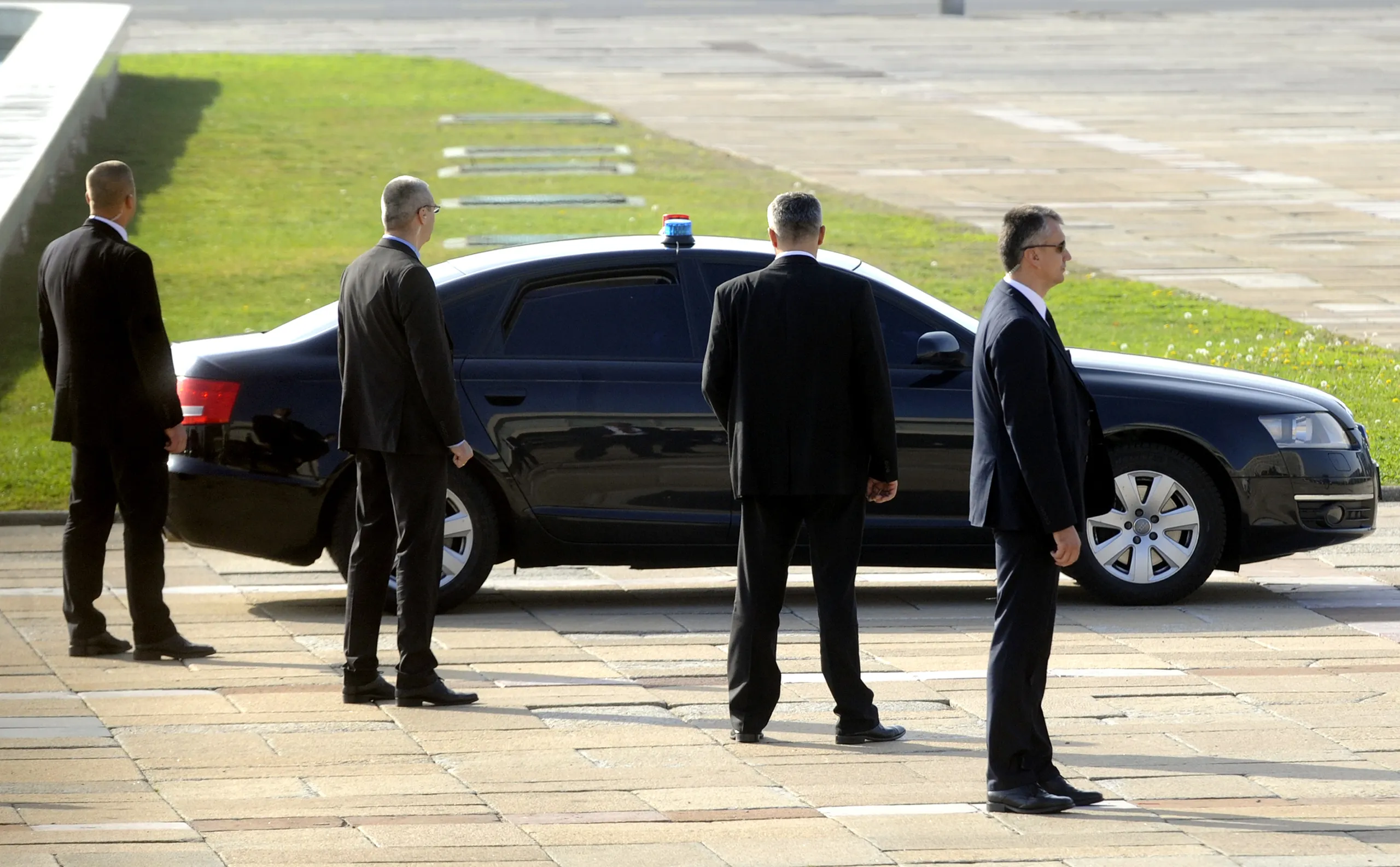
Armed robberies, carjackings and express kidnappings in Central America predominantly occur in ground transit. The risk window is the journey, not the meeting room. Pre-arranged vetted vehicles, no hailing or rideshare use, varied routes, no predictable schedules and a driver briefed on evasive route options are the baseline requirements across all five countries.
In Guatemala City and Tegucigalpa specifically, contact-reduction measures – arriving and departing from secure underground parking rather than visible street-level drop-offs – materially reduce the risk profile.
Local Licensed Providers
A vetted local licensed security company is not optional in Central America. Language, local threat intelligence, police and emergency service relationships, ground transport networks and regulatory compliance all require local expertise. The quality of local providers varies significantly. Pre-deployment vetting of the local provider should include licence verification, insurance confirmation, staff vetting documentation, reference checks from other multinational clients and a direct conversation with the assigned personnel.
Operationally qualified local drivers in Guatemala, El Salvador, Honduras and Panama typically have civilian defensive driving training, local threat area familiarity and communication protocols with their company’s control room. That baseline should be confirmed, not assumed.
OSAC Country Report Review
OSAC (osac.gov) publishes free, current country security reports for all five countries. These reports, produced by US Embassy security sections and vetted by private sector security practitioners, provide the most consistently updated open-source intelligence available for Central America. Pre-trip review is mandatory. Quarterly threat briefs are available between annual report updates. InSight Crime (insightcrime.org) supplements OSAC with organised crime analysis depth. Control Risks RiskMap 2025 provides operator-grade risk rating.
For further support on Latin America executive security, see our guide to executive security in Latin America and our regional analysis of close protection in South America.
James Whitfield is a Senior Security Consultant with operational experience across Latin America. This article draws on OSAC country reports 2024, FCDO travel advisories April 2026, InSight Crime 2024, UNODC Crime and Criminal Justice Statistics 2023-2024, Control Risks RiskMap 2025, ACLED Central America dataset 2025, HRW World Report 2025, and US DOJ press releases on the JOH conviction October 2024.
Key takeaways
Ground transport is the primary risk vector
In every Central American country, ground transport -- taxis, rideshare apps, informal vehicles -- carries the highest personal security risk. Armed robberies, express kidnappings and carjackings typically occur in transit. Pre-arranged vetted vehicles with known drivers are non-negotiable for principals at any threat level above routine.
El Salvador's security transformation is real but fragile
Bukele's Nuevas Ideas anti-gang crackdown produced a dramatic reduction in homicide rates. That improvement is real and documented. It is also tied to a specific political project. A change of government, a constitutional crisis or a shift in gang dynamics could alter the picture quickly. Security assessments should treat El Salvador as improved but not stable.
Honduras remains structurally high-risk
Honduras has not experienced the Bukele effect. San Pedro Sula and parts of Tegucigalpa remain extremely high-risk for extortion, kidnap and violent robbery. The US conviction of former President Hernandez in 2024 confirmed systemic state-level narco-trafficking. Executives operating in Honduras need thorough pre-trip intelligence, a local licensed provider and a clear evacuation route.
Panama City is the regional hub for secure operations
Panama City offers the most stable operating environment in Central America. Established financial services, multinational presence, good medical infrastructure and manageable crime risk make it the preferred base for regional operations. The Tocumen International Airport corridor and the Paitilla and Costa del Este business districts carry standard urban risk, not elevated threat.
Local licensed providers are not optional
None of the five countries can be safely operated in by a foreign CP team without a vetted local partner. Language, local threat intelligence, police and emergency service relationships, ground transport knowledge and licensing requirements all require a local licensed security company. The vetting of that local provider -- financial stability, operator licences, reference checks -- is itself a critical pre-deployment step.
Frequently Asked Questions
Request a Consultation
Describe your security requirements below. All enquiries are confidential and handled by licensed consultants.
Your enquiry has been received. A security consultant will contact you within 24 hours to discuss your requirements.
