
Security Intelligence
Airport and Transit Hub Security for Executives | CloseProtectionHire
Airport pick-up and drop-off are the highest-risk moments of any executive journey. A security consultant's guide to advance work, verified drivers, and transit hub threats.
Written by James Whitfield, Senior Security Consultant
Airports are routine. That is the problem. An executive who travels every two weeks builds habits – same terminal, same driver, same lounge, same route to the vehicle. Habits are surveillance gold.
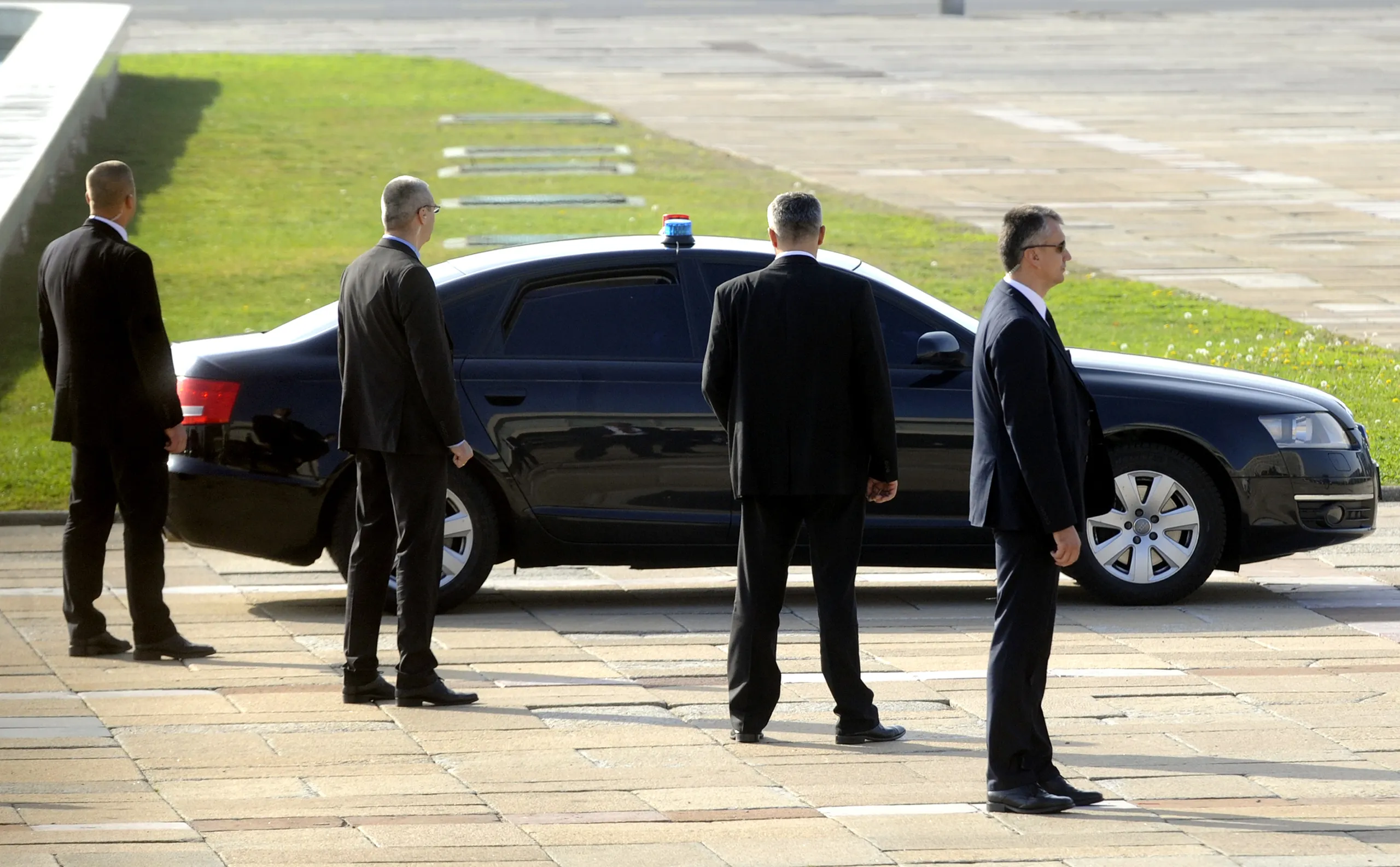
The airport transit phase covers the period from departure from the origin premises to boarding, and from disembarkation to arrival at the destination premises. Within that window, the pick-up and drop-off zones outside terminal buildings represent the highest concentration of risk. They are accessible to anyone. They are predictable. They are busy enough to obscure hostile positioning. OSAC’s Corporate Travel Security guidance identifies airport transit, and particularly kerbside activity, as among the most frequent locations for executive-targeted criminal incidents globally.
Why the kerbside is the problem
Inside the terminal, activity is filtered by ticketing and screening. Airside, the executive is largely removed from general public access. The kerbside is different. Anyone can stand in a drop-off zone, an arrivals hall, or a car park. There is no access control. In many high-risk cities, the approaches to major international airports pass through unlit, poorly policed road sections. In Lagos, Karachi, Nairobi, and Manila, this approach road is a documented risk segment in its own right – not just the terminal.
The attack methodology that exploits this window is not necessarily violent. More commonly it is intelligence gathering: surveillance teams observing executive arrivals to establish driver identity, vehicle registration, schedule pattern, and onward route. This intelligence feeds into a subsequent operation – a carjacking, a kidnap attempt, or a targeted robbery. The executive who uses the same vehicle on every trip, picked up by the same driver from the same kerb position, is providing all of that intelligence without any hostile effort.
Advance work at airports
For any elevated-risk principal, airport advance work is standard. An advance officer (usually a member of the CP team operating ahead of the main party) arrives before the executive’s flight lands and completes the following:
Confirm the vehicle is in position, that the driver is the agreed individual (using a challenge-response protocol), and that the vehicle has not been interfered with since the driver arrived. Identify the fastest route from aircraft to vehicle given current terminal conditions. Establish a secure holding position within the terminal if the executive needs to pause before proceeding to the vehicle – usually an airside lounge or a private office accessed through airport liaison, not a general public area. Confirm exit routes from the airport and flag any congestion or disruption on the primary and alternate routes. Identify the positioning for any uniformed police or airport security presence and assess whether this can be used as a resource.
At high-risk airports where local OSAC or FCDO guidance specifically calls out arrival risk – Lagos, Karachi, Manila, Nairobi, Bogota, Jakarta – advance work should include pre-arrival communication with the airport security authority. Many international airports in elevated-risk cities have a VIP or VVIP protocols unit that can provide an escort from the aircraft to a secure vehicle. This service is not automatic. It requires advance notification, a security firm contact, and sometimes a fee. The time to establish this arrangement is before travel, not at the gate.
The verified driver protocol
The standard image of an executive arriving at an airport and walking to a driver holding their name on a card is, from a security standpoint, a failure mode. A name card in arrivals advertises the executive’s identity to everyone in the arrivals hall. It confirms the executive is present, confirms the vehicle is waiting, and provides an opportunity for a hostile actor to intercept the executive before reaching the genuine driver.
The verified driver protocol is simple and adds no time to the process. Before travel, the executive and the driver agree a code word, challenge phrase, or identifying detail known only to both. On arrival, the executive confirms this with the driver before entering the vehicle. The driver can display a generic reference rather than the executive’s name. The executive does not approach any driver who cannot provide the agreed confirmation.
This protocol eliminates the impersonation risk at pickup. A hostile actor in the arrivals hall cannot provide the pre-agreed confirmation. The executive does not get into an unverified vehicle.
The protocol must be briefed at each trip – not assumed to carry over from a previous engagement. It must also be communicated to the executive’s travel PA or coordinator so they can confirm the detail with the driver at booking.
Landside vs airside threat distinction
The threat environment inside the airport changes sharply at the security screening point. Airside, the threat profile is primarily aviation-related: interference with aircraft, terrorism against aviation targets, air rage, and in very rare cases the targeting of a specific executive by a state or criminal actor with access to airside passes.
Landside – everything before screening on departure, and everything after baggage collection on arrival – is an open environment. The risk profile here matches the local city risk profile rather than an aviation-specific risk profile. At high-risk airports in elevated-risk cities, the landside risk level can be significant.
This distinction matters for journey planning. The most dangerous moment on many executive trips is not the flight. It is the fifteen minutes between arriving at the terminal building and reaching the vehicle. The close protection deployment should reflect this. A CPO who waits at the hotel and meets the executive on return has left the most exposed segment unmanaged.
VIP lounges: assessed use, not default
VIP and business class lounges reduce exposure in the general terminal. They provide a quiet environment away from the public concourse, and reduce the period during which the executive is visible and accessible to general public traffic.
The security trade-off is predictability. Lounge access lists are held by airline staff, ground handling agents, and airport contractors. If someone with access to these systems wants to confirm the executive’s presence and departure window, the lounge provides that confirmation. The lounge location is fixed and publicly known. An executive who always uses the same lounge at the same airport provides a predictable location between check-in and boarding.
For executives at moderate threat levels, lounge use is generally appropriate. It reduces exposure relative to the general concourse and provides a controlled waiting environment. For executives at elevated threat levels – specific threats, active surveillance concerns, high-risk origin or destination – lounge use should be assessed on the specific trip rather than used as a default. An alternative is a private room or secure office arranged through airport liaison in advance.
International arrivals: immigration interception risk
In a subset of countries, immigration and customs zones carry a distinct category of risk beyond the general criminal threat. Russia, China, Iran, Belarus, certain Gulf states, and some Central and Southeast Asian jurisdictions operate immigration systems that can be used as tools of pressure against foreign executives.
The risk is not primarily violent. It is detention, document seizure, denial of entry, or being held for questioning in a context where legal representation is delayed or restricted. This is distinct from standard OSAC kerbside risk. It requires a different planning response: pre-travel legal advice on entry requirements and known interception categories, an in-country legal counsel contact activated immediately on failure to pass through immigration within an expected window, and a corporate emergency notification protocol that does not wait until the executive fails to reach the hotel.
For executives travelling to these jurisdictions, the immigration zone is not the end of the risk – it is the beginning of a new category that continues through arrival, hotel check-in, and the period of in-country activity.
High-risk airports: specific environments
OSAC and FCDO guidance, cross-referenced with incident reporting from control room data (Control Risks, GardaWorld, International SOS), identifies a consistent set of airports requiring enhanced arrival and departure protocols:
Lagos Murtala Muhammed International (Nigeria). Carjacking and armed robbery targeting international arrivals is documented in OSAC Nigeria reporting. The approach road from the airport into Lagos is one of the identified high-risk segments. Executives should use a pre-arranged and security-confirmed vehicle, with an armed or uniformed escort element for elevated-risk travel.
Karachi Jinnah International (Pakistan). Targeted surveillance at international arrivals has been reported in OSAC Pakistan advisories. The security environment in Karachi requires a close protection presence from the point of arrival. Unescorted arrival with a standard taxi or rideshare service is not appropriate for most business travellers.
Manila Ninoy Aquino International (Philippines). Robbery targeting at Manila’s international airport is the most documented airport-related executive security concern in the Philippines. OSAC Philippines advisories consistently flag the terminals and the approach road to the Ninoy Aquino International Airport Expressway. A pre-arranged and identified vehicle is the minimum standard.
Nairobi Jomo Kenyatta International (Kenya). Vehicle theft and robbery targeting in the car park and approach area. OSAC Kenya advisories flag the route from JKIA into Nairobi as a priority risk segment. A reputable ground transport provider with pre-confirmed driver identity is mandatory.
Bogota El Dorado International (Colombia). Express kidnap and robbery targeting of arrivals from international flights is documented in OSAC Colombia reporting. Pre-arranged ground transport from a vetted, known provider, combined with CP coverage from the point of collection, is standard for business travel to Bogota.
Luggage and document handling
Two practical points that are routinely ignored:
Luggage labelling. External address labels on luggage provide hostile actors in baggage handling areas with the executive’s home or office address. Use destination hotel or office address labels only, and remove them on return. Business card tucked inside the bag rather than on an external label is the standard approach.
Document handling. Passports, boarding passes, and hotel booking confirmations should not be visible in transit. A boarding pass face-up on a table in a lounge provides onward destination intelligence to anyone in the vicinity. This is a low-effort intelligence-gathering opportunity for a surveillance team.
The departure phase
Most executive security attention goes to arrivals. Departures carry comparable risk. The executive’s schedule is known – the departing flight is booked and confirmed, the check-in time is set, and the kerbside window at the origin building is predictable.
The same protocols apply: verified driver at pickup, CPO presence or escort to the security screening point, route variation where possible. The CPO’s role does not end when the principal reaches airside – it ends when the executive is in the lounge or at the gate with no further landside exposure.
For executives with a CP team, the departure and arrival transit segments should be explicitly included in the operational briefing. The handover point between the outbound team and the inbound team – or between the corporate security programme and the in-country operator – should be defined precisely, not assumed.
For the close protection team structure that covers airport transit within a full executive protection deployment, see our executive protection team structure guide. For the advance work methodology that airport transit requires, see our what is advance work guide. For the risk assessment framework that determines whether airport CP coverage is warranted for a specific trip, see our security risk assessment guide. For executives travelling on luxury train services – the Venice Simplon-Orient-Express, the Blue Train, the Rocky Mountaineer, and comparable long-distance services – where the published fixed itinerary, confined environment, and minimal vetting of fellow passengers create a distinct close protection challenge requiring specific advance work, see our security for luxury train travel guide. For executives using private jet or business aviation – where FBO security variability, tail number OPSEC, charter operator vetting, and the departure exposure window require specific security planning – see our guide to security for private jet and business aviation. For the security risks specific to rail and metro transit – station-approach exposure, last-mile vulnerability from airport rail links, and the protective protocol for executives using intercity rail connections – see our rail and metro security guide for corporate travellers.
Sources
OSAC Corporate Travel Security Program: Airport and Transit Security Advisory, Overseas Security Advisory Council, 2024. FCDO Foreign Travel Advice: Multiple country advisories, UK Foreign, Commonwealth and Development Office, 2025. Control Risks RiskMap 2025: Ground Transport and Airport Transit Risk. GardaWorld: Executive Travel Security Protocols, 2024. International SOS Security Advisory: Transit Hub Risk, 2024. ASIS International: ASIS GDL CSXC-2012 Corporate Security Standard. State Department Overseas Security Advisory Council (OSAC): Country-specific airport risk bulletins, 2024.
Key takeaways
Pick-up and drop-off are the most dangerous segments
The landside public access zones outside terminal buildings are accessible to anyone, predictable for surveillance, and congested enough to obscure hostile activity. This is where the majority of airport-related executive security incidents occur -- not in the terminal or the aircraft.
Advance work at airports is not optional for elevated-risk travel
A CPO or advance officer attending the airport ahead of the principal -- identifying route options, confirming vehicle position, assessing current threat conditions -- reduces reaction time from minutes to seconds when a problem is identified.
Name-sign pickup is a security failure
Any driver holding a name card at arrivals is advertising the executive's identity to everyone in the arrivals hall. The verified driver protocol eliminates this exposure and reduces ambush risk at the vehicle.
VIP lounges are not automatically secure
Lounge access data is shared with airline and airport staff. Predictable presence in a fixed location is a targeting asset for a motivated threat actor. Lounge use should be a deliberate decision rather than a default.
High-risk airports require liaison, not just procedure
At the airports identified in OSAC and FCDO guidance as elevated risk, protocol alone is insufficient. Pre-arrival liaison with airport security, pre-clearance of a secure holding area, and an armed or uniformed escort component are standard practice for executive arrivals in these environments.
Frequently Asked Questions
Request a Consultation
Describe your security requirements below. All enquiries are confidential and handled by licensed consultants.
Your enquiry has been received. A security consultant will contact you within 24 hours to discuss your requirements.